Vision on sports policy: What needs to change.

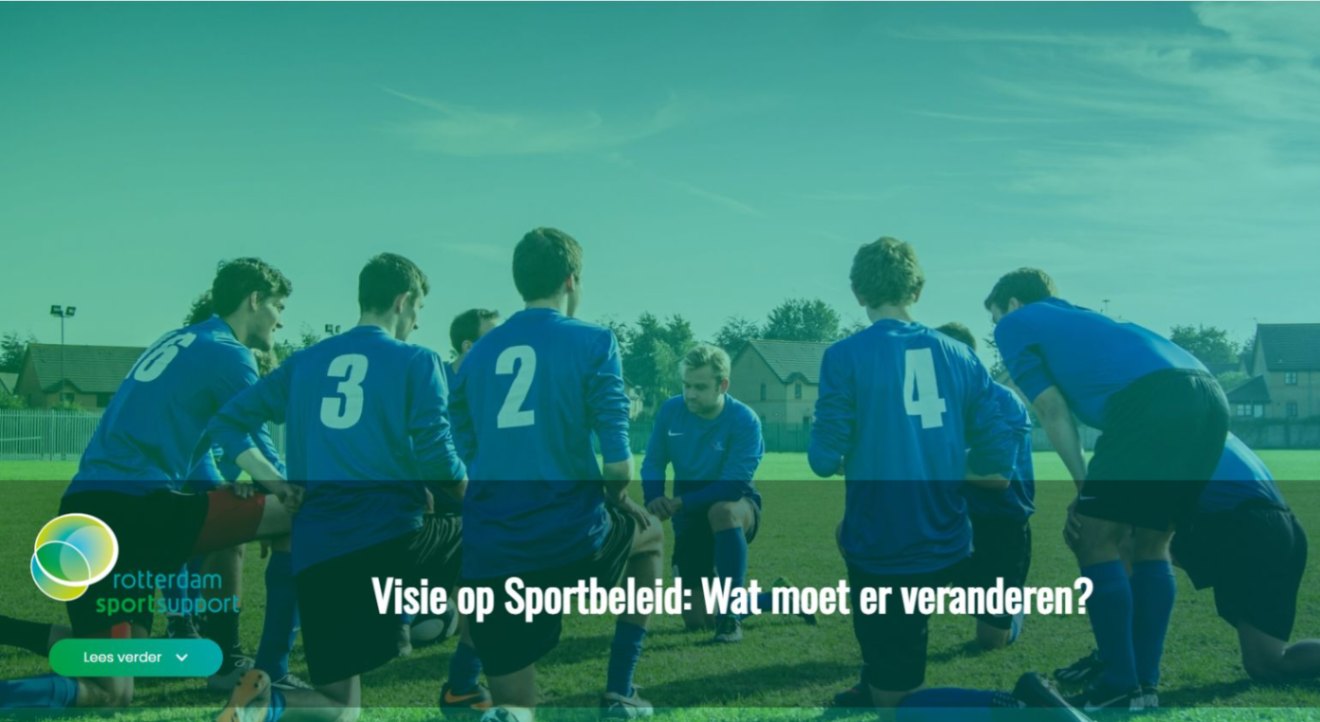
Vision on sports policy: What needs to change.
Sport is more than just movement; it is a way to connect people, promote health, and strengthen communities. However, in the Netherlands, there is still a lack of a clear, coherent vision for sports policy. Gert-Jan Lammens, director of Rotterdam Sportsupport, refers to a podcast with Tom van 't Hek titled: 'Urgent shortage of vision in sports?'
The answer to this is twofold," says Lammens. "On the one hand, there are countless passionate initiatives, both at the national and local level, that contribute to the sports and movement sector. On the other hand, there is a lack of coherence and direction. The big question remains: where do we want to take the Netherlands as a sports country? And how do we ensure that the many initiatives strengthen each other instead of operating in a fragmented manner?
The state secretary recently indicated in a sports debate that he found it to be 'pressure on the playing field'. This seems to point to a lack of alignment and collaboration among the many involved organizations. It is particularly crucial for sports clubs that they are better supported in the new strategy so that they can continue to fulfill their important role.
Translate the following text into these languages (en: English, nl: Dutch, zh: Mandarin Chinese, es: Spanish):
Translate the following text into these languages.
Rotterdam as an Example for Other Municipalities
Rotterdam has developed a unique approach with three execution organizations: Sportbedrijf Rotterdam, Rotterdam Topsport, and Rotterdam Sportsupport. Each organization has specific tasks. Rotterdam Sportsupport, for example, focuses on strong, future-proof sports clubs and scouting groups. Through innovative projects like the Schoolsportvereniging and the platform Beweegcoach.nl, sports are made accessible to broad target groups, from school-going youth to vulnerable adults.
Other municipalities can learn from this approach by focusing on collaboration, innovation, and customization. By supporting sports clubs and integrating sports offerings into other social domains, a network is created that literally and figuratively gets residents moving.
Translate the following text into these languages.
Strong Associations as the Basis for Movement
Sports associations play a key role in keeping people active in the long term and with enjoyment. The social aspect of associations makes members feel connected, which is essential for sustainable participation. Therefore, we must not only cherish associations but also actively strengthen them. This means providing support in financial and organizational areas so that they can handle the growing pressure of laws and regulations.
"Associations often operate like businesses, but with the resources of volunteer organizations. This leads to bottlenecks," explains Lammens. "By giving trust and space to volunteer energy, associations can achieve a lot. A relationship of trust and high-quality support are essential for this."
What should the new Sports Act regulate?
The new sports law must not only recognize the value of sports and physical activity, but also emphasize the strength of associations. In a time of polarization and uncertainty, sports clubs serve as a social adhesive. This cultural heritage must be cherished and strengthened.
In addition, the accessibility of sports must be ensured, especially for people living in poverty or experiencing other barriers. Sports often serve as an outlet for them and can contribute to both physical and mental resilience. Finally, there needs to be a critical assessment of the regulatory burden on associations. Volunteer efforts are not unlimited, and the focus should be on what really matters.
Translate the following text into these languages.
The Future of Rotterdam Sports Clubs
A recent vitality survey among 350 Rotterdam sports clubs shows that these clubs deliver an impressive performance, despite the many challenges. However, there are points of concern. Two out of five clubs expect that they will not be able to meet financial obligations in the long term. The management of facilities is also a bottleneck. The biggest challenge remains recruiting and retaining volunteers, especially for board and technical positions.
These insights help to further develop the support,” Lammens explains. “Thanks to the municipality of Rotterdam, Rotterdam Sportsupport receives the resources to assist associations and invest in the quality of sports facilities. This proves that collaboration and targeted investments can contribute to a vital and resilient sports landscape.
The future of sports in the Netherlands lies in collaboration, vision, and strengthening the foundation: the clubs. By following the example of cities like Rotterdam and focusing more on policy, we can make sports accessible and sustainable for everyone.
Other articles by Gert-Jan Lammens