

Putiton | The Sea as Infrastructure of Control - A European Reflection in 2026

Putiton | The Sea as an Infrastructure of Control - A European Reflection in 2026
Putiton | The Sea as Infrastructure of Control - A European Reflection in 2026
The waves rise high and deep. They move continuously, disappearing into the openness of the sea and returning time and again.
For #Putiton, this is not a romantic image, but a reality that is often underestimated. The sea is not an emptiness. It is structure. It is bearer.
Translate the text
Johan Florissen, leader of the country for ten months, gazes out over the water. Restless, but thoughtful.
Now that old blockages are gone, he changes what is possible. Not to dominate, but to understand where vulnerability lies. His thoughts do not focus on possession, but on influence.
Not towards dominance, but towards reach.
He thinks about the past, about civilizations that understood that whoever understands the sea understands the world. The Romans called it Mare Nostrum.
Not because they wanted to take everything, but because they knew that control over routes, connections, and flows was crucial for stability.
Translate the following text:
European Waters and an Invisible Threat
In 2026, Europe will face a new reality. Increasingly, ships from outside Europe are navigating the European maritime domain.
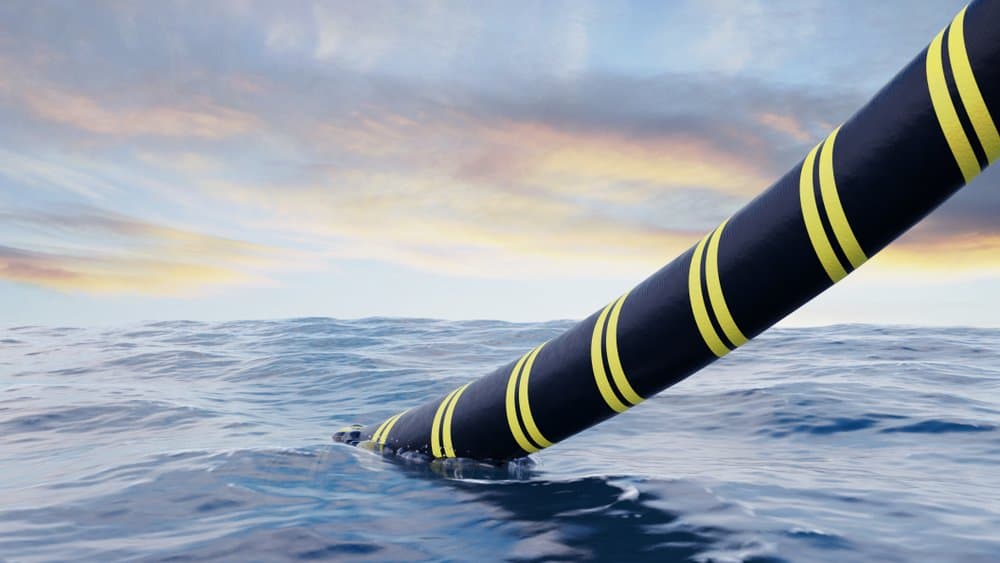
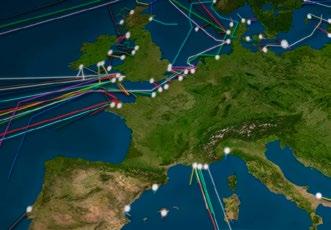
Not only for trade, but also for observation. Under the water's surface lies an infrastructure that is crucial for our society: international data cables.
More than 95 percent of global internet traffic runs through undersea cables. Communication, financial transactions, energy supply, defense, healthcare—everything depends on data. And data moves through water.
@Putiton signals a concerning development: countries strategically operating within European waters, aiming to disrupt, damage, or influence data connections. Not openly. Not militarily. But subtly, technically, and difficult to trace.
Please translate the following text into the requested languages.
Text to be translated
Control over data means control over information flows. And those who can influence information flows ultimately influence people.
The ocean: Bigger than we think, more manageable than we want to admit
Please provide the text you wish to translate.
The scale of the sea is often used as an argument against control. Too big, too deep, too complex. But the numbers tell a different story.
The world’s seas and oceans cover 71 percent of the Earth’s surface — equivalent to 361 million square kilometers. Together, they contain approximately 1.332 billion cubic kilometers of water, or 1.332 trillion liters.
That sounds elusive. But precisely because almost all global connections focus on specific routes, nodes, and corridors, the sea is not random, but structured. Those who understand these structures can protect — or disrupt.
#Putiton stelt daarom een ongemakkelijke vraag:
If our society relies on a limited number of underwater connections, how uncontrollable is the sea really?
From Legal Rights to Digital Sovereignty
The UN Convention on the Law of the Sea regulates borders, economic zones, and environmental protection. But it was written at a time when data was not a strategic foundation. In 2026, that changed.
The sea is no longer just a natural space, but a digital carrier. European waters are no longer a neutral territory, but part of our digital sovereignty. Protecting the maritime domain means protecting democratic processes, free information, and societal stability.
The appeal is not for isolation, but for awareness. Not for confrontation, but for preparation. The sea does not have to belong to one party, but it also cannot belong to everyone at the same time without responsibility.
Translate the following text:
A Different Perspective on Control
Florissen looks at the water again. He sees no struggle. No symbols. He sees connections. Fragile, essential, indispensable.
Control is not an end in itself here, but a condition for freedom.
Without secure data flows, there is no open society.
Without a protected maritime domain, there is no digital autonomy.
Putiton puts this reality into words. Not to sow fear, but to create clarity.
Source: Putiton.online
Where sea, data, and society come together.
Other articles by PUT-IT-ON Energy

The Energy Transition Without Critical Questions Is Not a Transition but Dogma
May 12, 2026 · 13:53READ MORE
Shell announced on Thursday the results for the first quarter of 2026.
May 7, 2026 · 07:50READ MORE
Curaçao's premier sees ministers come and go, but is especially pleased with an oil tanker full of Venezuelan crude oil.
Jan 19, 2026 · 14:13READ MORE