BZK is pulling out all the stops to fire clock-ringer Van Oordt

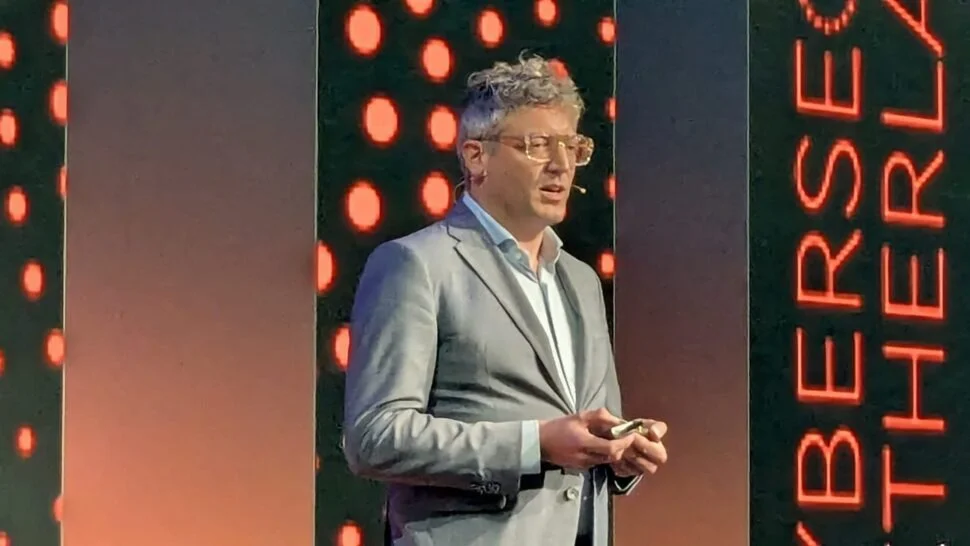
Source: Rik Sanders / Computable
Pieter van Oordt, Logius's chief privacy adviser, must leave this IT service provider of the national government because of his role in the 'crusade' against the takeover of Solvinity by the American company Kyndryl. He had already been suspended. For the dismissal application, the Ministry of the Interior and Kingdom Relations (BZK) has sent the court a total of 770 pages of documents.
The Ministry of the Interior and Kingdom Relations (BZK), which oversees Logius, is requesting the dismissal of the civil servant who for months warned, internally and externally, about the risks if DigiD and MijnOverheid come under American influence. Logius manages the platforms on which these services run, while the Amsterdam-based Solvinity provides their technical support.
Van Oordt thought that with his actions he was serving the public interest. But his employer found it disruptive that he stepped outside his official role in doing so. Measures were taken to isolate him. Logius director Bert Voorbraak prohibited him from communicating with the civil service and political leadership of BZK about these risks.
War of attrition
BZK and Logius have now chosen a war of attrition against Van Oordt who, given the many reactions on social media, receives considerable moral support but has to pay a financial price. Legally, his employer chooses to open up all the records. To wrap up the dismissal request, the ministry is letting the bureaucratic machinery run at full speed. The result is a 98-page petition with no fewer than 186 annexes; a total output of 770 pages.
A small army of senior officials and practically the entire top of the ministry have been deployed, along with the lawyers of Pels Rijcken. Although the outcome of the DigiD affair largely vindicated Van Oordt, and the takeover of Solvinity was prohibited, the whistleblower is meant to be brought down. He now has to take on the ministry more or less alone, a ministry that spares neither money nor effort to get rid of a critical official. In an initial reaction, Van Oordt says: 'The struggle is completely out of proportion. With an overwhelming force of lawyers and officials against me, they are trying to bury me in paperwork. 770 pages and no lawyer.' He has asked the minister in a letter for a fair process. 'I cannot prepare this without lawyers.'
Public attention
The whistleblower is mainly held against for publicly drawing attention to the security risks following the takeover. The US government could not only gain access to the data of Dutch citizens, but could also pull the plug; a doomsday scenario that resonates strongly in the House of Representatives.
Above all, he is being criticized for going public with internal concerns and documents as chief privacy officer (CPO). He spoke openly about it despite the ministry's instruction to stay silent and handle the matter internally. Because of the great public importance of this affair, he recently also gave a keynote at Cybersec Netherlands in Jaarbeurs Utrecht. That action also has a legal aftermath.
But what bothered the Logius leadership most was his criticism of their own organization. Van Oordt accused the top of Logius, including outgoing director Bert Voorbraak, and its ministry of insufficiently or even deliberately not including risks in official letters to the House of Representatives. Crucial information was withheld. Van Oordt also felt that alternatives should have been considered in time.
Pushing through the takeover
Voorbraak, who had known for a long time about the planned deal with Kyndryl, was however not in favor of a migration to another hosting provider. According to Van Oordt, alternatives were switched off before the politicians could decide on them. His opponent Voorbraak would have done everything possible to push through the takeover. Van Oordt said in NRC: ‘Anything that deviates from that line is not passed on to the ministers or the House of Representatives. Anyone who opposes this will be held accountable for it.’
Only part of a security impact analysis was sent to the House of Representatives (sent). This analysis concluded that mitigating measures are insufficient to guarantee the availability of DigiD and privacy. The most relevant technical component of the advice was missing, when it turned out that it could complicate the takeover. Information was also withheld from the state secretary and the minister, according to Van Oordt. The whistleblower also finds it strange that from the beginning the risks were determined together with Solvinity and Kyndryl. Normally this happens internally, with the ministry's own security and privacy experts and Logius as the implementing service.
Holding the hand above the head
The privacy official first reported the risks internally to the board of directors, the Secretary-General and his deputy. He then reported the dangers to the House for Whistleblowers and finally made them public, including in Computable and in interviews with De Volkskrant, The New York Times, NRC and BNR.
Van Oordt felt great pressure from his superiors in doing so. He was excluded from consultations. On 24 April 2026, he was suspended, and he was then given notice of dismissal. While Van Oordt was committed to the public interest and that of his organization, he himself was labeled a risk to the 'system'. According to him, a climate has arisen within the civil service of the Ministry of the Interior and Kingdom Relations (BZK) and Logius in which the top protects each other and mistakes are covered up.
Other articles by PUT-IT-ON Newsroom