

Rivella now Soft Drink Tax on Whey Protein Shakes

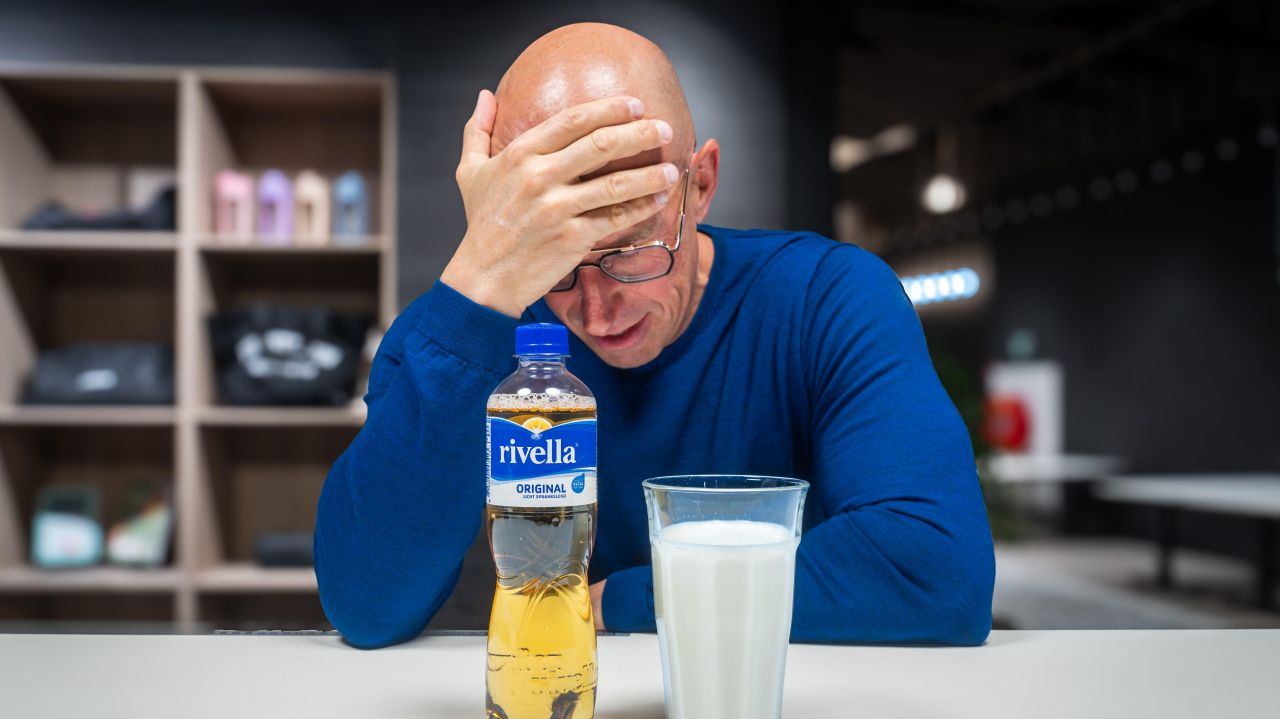
Door Rivella now Soft Drink Tax on Whey Protein shakes
This is a classic example that following the letter of the law produces an outcome that is in stark contrast to the original intent of the law.
It may be somewhat tough material, I'll try to keep it as short and simple as possible, but some things just require a bit of explanation and background information.
It concerns the Excise Duty Act on Non-Alcoholic Beverages from 1993, specifically Article 9. This article provides a brief description of which products are subject to excise duty.
Lemonade is understood to mean fruit or vegetable juice diluted with water, as well as sweetened and aromatic drinks and beverages to which aroma or flavoring agents have been added that are clearly intended to be consumed unheated.
Please provide the text you would like to have translated.
2) Lemonade is also considered to be the drink referred to in the first paragraph, in solid form or as a concentrate.
The same article also states that dairy products are not classified as lemonade and therefore fall outside the consumption tax.
Translate the following text into these languages:
3) As lemonade is not classified: the drink made from milk or milk products with a milk fat content of 0.02% m/m or more, which contains milk protein and milk sugar, not being a drink made from whey or whey products;
This has become law because dairy products also contain good nutrients. However, a clause has been added to the milk exception > not being a drink made from whey or whey products. This feels very strange and this is where it goes wrong. Whey is a yellowish liquid that is released from the milk when you make cheese. In the past, this was discarded or used as animal feed. Until it was discovered that this is actually the most high-quality part of the milk. That you could also further concentrate and dry this into something we now know as Whey Protein. A product that contains between 80% and 90% protein, which also includes milk fats and milk sugars, much more nutritious than the milk it comes from. But why is whey explicitly excluded from the milk exception, that doesn’t make sense, does it? It doesn't make sense and to understand how this became law, you need to go back to parliamentary documents from 1992 where the proposal for the new consumption tax law is discussed.
Kamerstukken 22843 nr. 4 – Page 8 The members of the PvdA faction found it incomprehensible that the government proposes to exclude weidranken from the tax. In the further report, the government explicitly argues that whether or not to include certain drinks in the tax is not primarily about health aspects, but about their place in the consumption pattern. In their opinion, weidranken occupy the same place in the consumption pattern as soft drinks. This is also visible in daily life in the store, where weidranken are usually displayed with soft drinks, and not with dairy products.
Translate the following text into these languages.
The beverages mentioned here refer to Rivella, a soft drink that has a little whey added, but contains no further nutrients. This would classify Rivella as a milk product and thus exempt it from consumption tax. This is not the intention of the milk exception, and therefore a proposal for a legislative amendment has been made.
Amendment by Van der Vaart and Ybema – Parliamentary Paper 22843 – 1992 - The undersigned propose the following amendment: In article 9, third paragraph, part a, at the end, replacing the semicolon with a comma, add: not being a drink made from pasture or pasture products;.
Explanation: This amendment aims to bring drinks made from grass or grass products under the levy of the excise tax on non-alcoholic beverages, as this product competes with other soft drinks and the excise tax should not disrupt this competitive relationship.
Translate the following text into these languages
Whey products are therefore excluded from the milk exception, so you cannot add a little liquid whey to a soft drink to avoid the consumption tax, that is clear. Only in 1992, whey protein (highly concentrated form of liquid whey) as it exists now was not known at all. And certainly not in the Netherlands, that came later. A product that does not compete with soft drinks, does not stand in the soft drink aisle, is not thirst-quenching but rather nourishing. And even more nourishing than the milk it originally comes from. To give more insight, the table below shows the difference in nutritional values between Rivella (where it all started), semi-skimmed milk, and our Perfect Whey in a mixing ratio of 1:4, the law calculates with this mixing ratio. Here you can clearly see that Rivella (with whey in it) is not nourishing, and that Whey Protein has much better nutritional values than milk but still does not fall under the milk exception.

Now there are also protein shakes that are not based on Whey (the highest quality part of milk protein) but on complete Milk Protein (Milk Protein Concentrate - MPC). Milk protein consists of 20% whey and 80% casein, a shake based on Milk Protein is also included in the table. And this does fall under the milk exception. Whether a protein shake is based on Whey or Milk Protein, they are very similar, all have the same purpose and time of use. The only difference is that for a whey-based protein shake, a consumption tax is due because this is how it is stated in the law according to Rivella.
For 27 years, certainly until 2020, the Customs authorities also agreed with this and found that the excise tax did not apply to these whey protein shakes. These are products that are high in protein, not meant to quench thirst but rather to be nourishing. In 2010, the Haarlem court also ruled that products with a high protein content should not fall under the excise tax. Around 2020, Customs apparently started to think differently about this and began to rely on the literal wording of the law. They took the position that excise tax must be paid on whey protein shakes. However, this position was never communicated to the industry nor to all the producing companies in the Netherlands that are first in the chain responsible for excise taxable goods. Now, in December 2025, there has been another lawsuit at the Haarlem court. The court ruled that if you follow the law, excise tax must be paid on whey protein shakes. I cannot say whether the original intent of the law and the deviation from the current application were also discussed. However, I have understood that there is still a pending appeal and that the case will likely ultimately end up at the Supreme Court.
Translate the following text into these languages
But with this ruling in hand, the Customs feels strong enough to now assess all companies producing in the Netherlands with a 5-year retroactive effect for this consumption tax. It concerns about 5 family businesses in the Netherlands, some of which have been in this business for 20 years and are receiving assessments ranging from millions to over 10 million; some will go bankrupt as a result. And for clarity, we do not produce ourselves, so I am not sharing this out of self-interest initially.
Translate the following text into these languages
Whether you agree with the consumption tax or not, if this is the starting point, communicate it clearly to the industry. Then everyone can take it into account. And since the consumption tax is a cost-increasing tax that is ultimately paid by the consumer, this tax can be passed on in the supply chain. If you start assessing production companies back to 5 years ago, those companies did not have this option. Therefore, they have to bear all the consumption taxes themselves, with all the consequences that entails.
Please provide the text you would like to translate.
The latest reports indicate that the regulatory authorities are further stretching the concept of what is and isn't subject to consumption tax. Products that are legally classified as meal replacements, intended to replace a meal, also include lemonade. This is according to the Customs interpretation. They suddenly no longer see dairy products to which 1% whey has been added as dairy products. It is all a very broad interpretation of the literal text of the law, but to be honest, nothing surprises me anymore at this moment. A higher court will have to address this.
Translate the following text into these languages.
Furthermore, I understand that the entire consumption tax legislation will be reformed during this government term, which is well overdue, as the current law dates back to 1993. The idea now is that it will move more towards a sugar tax and health will play a greater role in this law.
Translate the following text into these languages (en: English, nl: Dutch, zh: Mandarin Chinese, es: Spanish):
To be continued, we might say....
Other articles by René Van der Zel

XXL Nutrition livery at the Dutch GP in Zandvoort.
Aug 26, 2026 · 06:22READ MORE
We don't just deliver shakes… we build half gyms
Apr 12, 2026 · 15:04READ MORE
How René van der Zel surpassed €100 million with XXL Nutrition – without having that as a goal.
Nov 10, 2025 · 09:48READ MORE