
De meeste DGA’s en business leaders maken geen fouten. Ze nemen besluiten.
𝐄𝐧 𝐬𝐨𝐦𝐬 𝐩𝐚𝐤𝐭 𝐳𝐨’𝐧 𝐛𝐞𝐬𝐥𝐮𝐢𝐭 𝐚𝐧𝐝𝐞𝐫𝐬 𝐮𝐢𝐭 𝐝𝐚𝐧 𝐛𝐞𝐝𝐨𝐞𝐥𝐝
𝙁*𝙘𝙠 𝙐𝙥 𝙁𝙧𝙞𝙙𝙖𝙮 is een plenaire, in-company sessie (± 2 uur) voor leiders die snappen dat groei begint bij open...

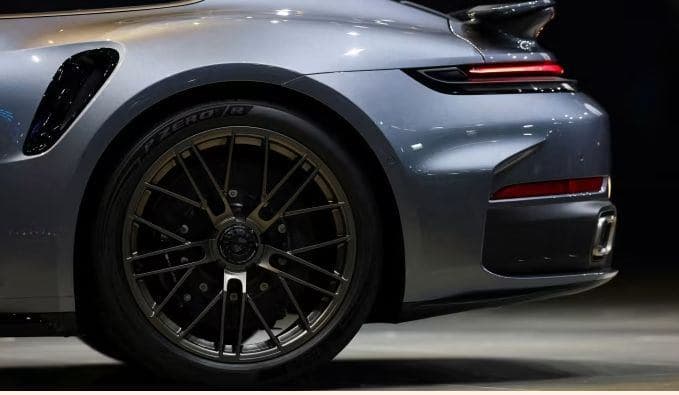
Porsche in the Red: A Costly Pivot from EV Ambition to Petrol Power
By Putiton Newsroom |
For the first time since its 2022 IPO, Porsche has fallen into the red, reporting a near €1 billion operating loss—a stark reversal for a company long considered the profit engine of the Volkswagen Group.
The German marque’s third-quarter operating loss of €967 million contrasts sharply with a €974 million profit in the same period last year. Over the first nine months of 2025, Porsche’s
operating profit dropped to a mere €40 million, down from €4 billion in 2024 — a steep descent by any measure.
At the core of this downturn lies a strategic shift away from full electrification toward petrol and hybrid models — a move that underscores both the market’s changing appetite and the brand’s reassessment of identity.
A Calculated Retreat from the Electric Fast Lane
Porsche has long been a pillar of stability for Volkswagen, but its latest decision signals a broader truth: the electric vehicle boom has hit turbulence. Lower-than-expected EV demand, particularly in China, combined with a 26% drop in Chinese sales and U.S. tariffs on imported cars, has compounded the pressure.
CFO Jochen Breckner described 2025 as “the trough before a noticeable improvement” expected from 2026 onward — a phrase that sounds like both reassurance and reality check.
Porsche is “consciously accepting weak results,” Breckner said, as it reorganizes its product lineup. The company recently took a €1.8 billion charge after shelving a new all-electric SUV to accelerate the rollout of new petrol and hybrid vehicles.
According to Breckner, these measures are “essential to strengthen Porsche’s resilience and profitability in the long term.”
Reaffirming Brand DNA — or Risking It?
From a marketing standpoint, this is more than a product realignment; it’s a brand recalibration. Porsche’s DNA has always revolved around performance, individuality, and emotional connection — values that many consumers still associate with combustion engines.
By “making cars more individual, exclusive, and desirable,” Porsche aims to reignite the emotional core of its brand — even if it means taking a temporary hit to the balance sheet.
Still, the decision is not without risk. The operating margin forecast for 2025 has been slashed to just 0–2%, down from a robust 14% last year. For a brand that has historically stood for performance in every sense, these numbers mark unfamiliar territory.
Leadership Shift Amid Strategic Overhaul
Adding to the transition, CEO Oliver Blume—who has led Porsche for a decade—will step down at year’s end. He will be succeeded by Michael Leiters, former McLaren chief, known for balancing engineering excellence with strategic agility.
Blume will remain Volkswagen Group CEO, ensuring continuity of oversight as Porsche navigates this delicate transformation.
The Consultant’s Take
From a 20-year marketing perspective, Porsche’s pivot reads as a strategic reset, not a retreat. The brand appears to be buying time to reassert its purpose, stabilizing around what made it great — precision engineering and emotional performance — while recalibrating its EV ambitions for a market that’s evolving more slowly than once predicted.
If executed well, this phase could serve as a brand renaissance rather than a crisis. Porsche’s challenge now is not just technological, but narrative: convincing investors and consumers alike that this is a pit stop, not a breakdown.
We'll send you a nice letter once per week. No spam.


