What’s Going On: Central Banks Buying Gold — A Big Shift | Putiton
What’s Going On: Central Banks Buying Gold — A Big Shift
20 Views
Put It On NewsroomPutIton Newsroom
What’s Going On: Central Banks Buying Gold — A Big Shift
What’s Going On: Central Banks Buying Gold — A Big Shift
Record High Gold Accumulation
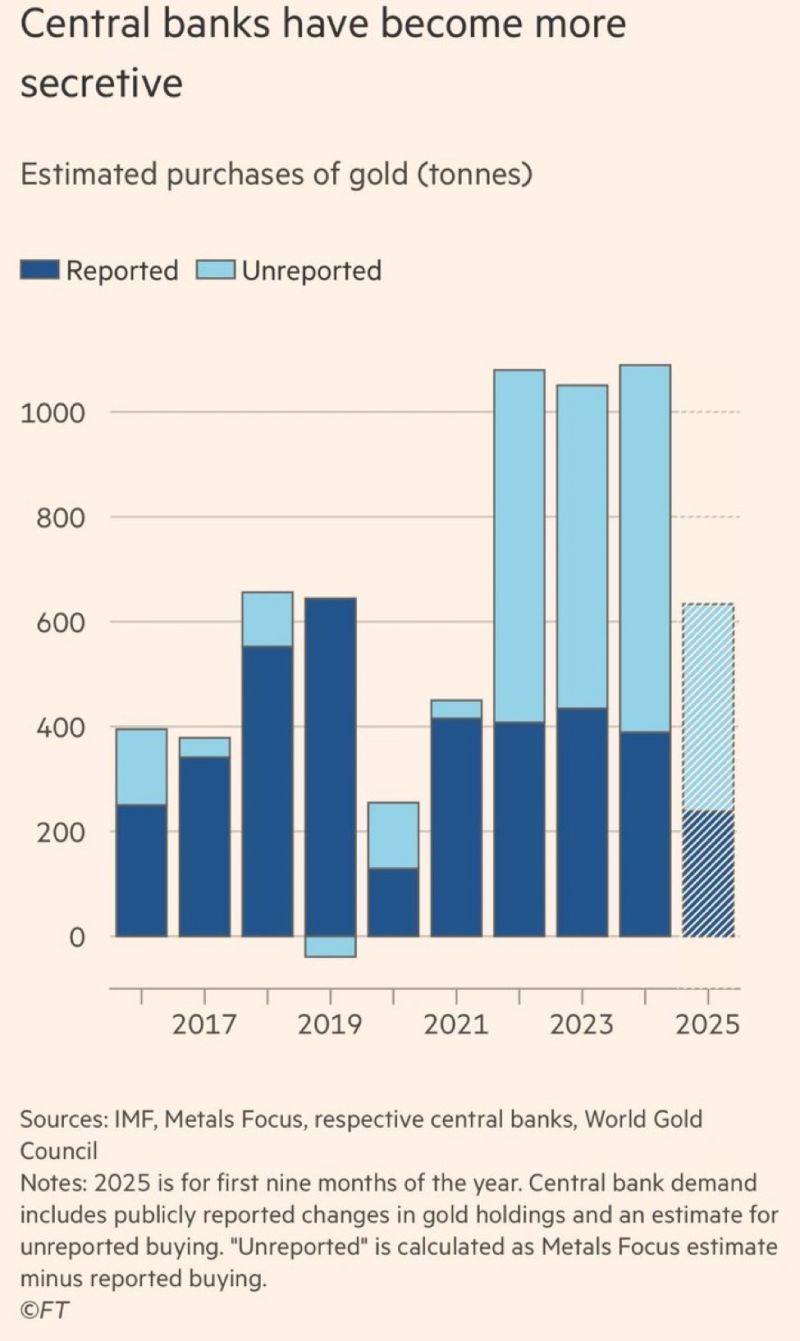
According to the World Gold Council (WGC), central bank demand has been very strong recently. For example, in 2023 global net central bank gold purchasing reached 1,037 tonnes, nearly matching 2022’s record. World Gold Council
This sustained high demand has created a structural floor under gold prices, because central banks are now big, consistent buyers. India Today+2EBC Financial Group+2
Some estimates suggest that unreported central bank gold buying is very large — not just the “official” figures reported to the IMF or other international bodies, but much more. BullionStar Singapore+1
According to the WGC’s Q3 2025 data, about 66% of central bank demand in that quarter was unreported, meaning it doesn’t show up in publicly disclosed reserves. World Gold Council
Why Central Banks Are Buying More Gold Several factors are driving this accumulation:
Geopolitical Risk & Sanctions: Many central banks appear more wary of relying on fiat reserves denominated in currencies like the U.S. dollar, especially given geopolitical tensions. Gold is “sanctions-proof” in a way — if held physically in one’s own vaults. India Today+1
De-dollarization: Some countries explicitly see gold as a way to reduce dependence on the dollar in their foreign reserves. India Today
Macroeconomic Uncertainty: Inflation, unpredictable interest-rate environments, and global economic volatility are pushing central banks to favor a hard asset that is non-counterparty (gold has no default risk). India Today
Local Gold Sourcing: Some central banks are buying gold directly from domestic mines, paying in local currency. This helps them build reserves without converting foreign-exchange reserves. CNBC
Structural Reserve Strategy Shift: It’s not just a tactical hedge — for many, this seems like a long-term strategic shift in how reserves are managed. AInvest
Why the Secrecy / Lack of Transparency
Here are some of the main reasons why a large portion of central bank gold buying is “unreported,” or at least not fully transparent:
Voluntary Reporting to the IMF
Official gold-holding data often comes from the IMF’s International Financial Statistics (IFS), but reporting to it is voluntary. So not all central banks consistently or fully report their gold purchases. BullionStar Singapore+1
Because of this, “unreported” purchases are often estimated by third parties (like the WGC or research firms like Metals Focus) based on private sources, market flow observations, and other intelligence. Financial Times+1
Strategic Discretion
Central banks may prefer not to disclose large purchases publicly, because revealing them could “telegraph” their strategic reserve moves to markets or other countries, possibly undermining their advantage.
If a central bank publicly announces a big gold accumulation strategy, it might drive gold prices up, making future purchases more expensive (i.e., they could push the price up against themselves). Quiet accumulation allows more favorable price execution. Gold-Price.Live
Political or diplomatic considerations: for example, disclosing large gold buys might raise eyebrows domestically (“why are we hoarding gold?”) or internationally (“are they planning something?”).
Use of Non-Central-Bank Entities
Some buying might happen via state-owned funds or other agencies, not just the central bank’s balance sheet — making tracking harder.
Also, because some central banks source gold domestically (from local mines) and pay in local currency, these flows may not register via the standard international statistical channels. CNBC
Why This Is Significant — The Bigger Picture
Reserve Management Paradigm Shift: This isn't just gold for show. Many central banks are rethinking reserve allocation: moving away from “just treasuries or FX” toward more real, tangible assets. AInvest
De-risking Against Geopolitical Risk: The trend reflects a broader wariness of “fiat money risk,” especially in a multipolar world where currencies and geopolitics can be weaponized.
Increasing Role of Emerging Markets: Much of the recent gold accumulation comes from emerging-market central banks, not just the old gold powers. World Gold Council
Market Impact: Because central banks are such large buyers, their behavior heavily influences gold markets. If true, the “unreported” buying might mean there’s even stronger structural demand for gold than the public realizes. This could support gold prices long-term.
Financial Sovereignty: For some countries, gold builds financial sovereignty. If gold is held physically domestically, it’s less exposed to foreign policy risk.
Risks, Challenges & Open Questions
Accuracy of Estimates: Because so much buying is unreported, many of the numbers (especially for “unreported” purchases) are based on estimates. There’s uncertainty around how precise these models are. BullionStar Singapore
Liquidity Risk: Holding large gold reserves is good for risk diversification, but gold is not as liquid or yield-bearing as sovereign bonds. If a central bank needs liquidity fast, selling large gold holdings can be difficult or costly.
Valuation Risk: While gold is often seen as a safe haven, its price can be volatile, and long-term returns are not guaranteed to outperform other assets.
Storage & Security: Physical gold must be stored securely (vaults, insurance, transport). There are costs and operational risks.
Political Risk: If countries are buying gold in secret for geopolitical reasons, this could escalate tensions, especially if perceived as part of “de-dollarization” or a challenge to the current reserve currency system.
Why the Financial Times (and Others) Are Paying Attention
The FT and other financial media are increasingly pointing out the gap between “official” reported reserves and what third-party analysts estimate. That gap is getting large enough that it can’t be ignored.
For markets, this matters: if central banks are quietly accumulating more gold than they publicly claim, that could support gold prices more durably than typical “investor safe haven” demand.
For geopolitics, it’s a signal: central banks accumulating physical gold (especially in a non-transparent way) may reflect long-term hedging against currency risk, sanctions, or a more fragmented global financial system.
My Take (Analysis)
This looks like a structural shift in how many central banks view reserves: not just as “cash and bonds” but as diversified portfolios that include hard assets.
The secrecy makes sense from a strategic reserve-management perspective: central banks want to minimize signaling risk, avoid pushing up gold prices, and retain flexibility.
But the scale of “unreported” buying suggests a deeper, more deliberate move toward gold that could reshape reserve currency dynamics over the coming decades — especially if more central banks follow.
PUT-IT-ON LIFESTYLE REPORT
Sharp tailoring. Hot legacy. Zero apologies.
Tom Ford: The Resurrection of First-Class Seduction
There are designers… and then there is Tom Ford — a man who didn’t just dress an era, ...
LinkedIn scant zonder toestemming de browser van gebruikers op 6.000 extensies
Auteur: Arjan Terpstra
Elke keer als een gebruiker inlogt op LinkedIn via een Chrome browser, wordt door LinkedIn actief gescand op de aanwezigheid
van zo'n 6.000 specifieke Chrome-extensies, waaronder tools d...