

What is happening financially worldwide? A realistic look at debt, shifts in power, and the future of money.

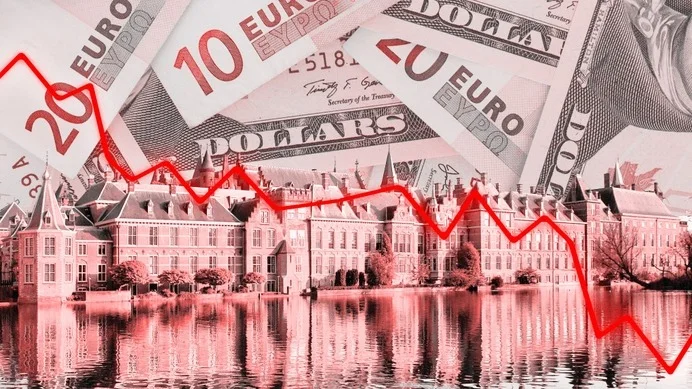
What is happening financially around the world? A realistic look at debt, power shifts, and the future of money.
There is a growing sense worldwide in financial and macroeconomic analyses that something fundamental is shifting. Rising U.S. debts, geopolitical tensions, and the emergence of new economic power blocs are increasingly seen as signs of a turning point in the global financial system. But what is really happening now—and how much of it is structural change versus short-term fear?
After twenty years of writing about markets, macroeconomics, and global financial cycles, one pattern is clear: financial systems rarely collapse in the dramatic way suggested by headlines. They evolve slowly, unevenly, and often only become visible in hindsight.
The American debt issue: real problem, wrong interpretation
A large part of the current concerns focuses on the US national debt, which is now above 120% of GDP. Due to the higher interest rates, the costs of debt repayment have risen sharply, and according to many projections, interest expenses could exceed 1 trillion dollars per year.
That is not small. Higher interest burdens limit the budgetary space and increase long-term vulnerability. However, the term 'bankruptcy' is misleading here. The United States is not a household or business: it issues debt in its own currency, the US dollar, which is still the world's primary reserve currency.
That difference is crucial. As long as global demand for U.S. Treasury bonds remains high, the U.S. can continue to refinance its debts. The risk is therefore not immediate insolvency, but a gradual erosion of fiscal discipline and monetary stability.
Global Shift: From Unipolar to Multipolar World Economy
What is more relevant than a 'collapse' of the US is the gradual transition from a unipolar to a multipolar financial system.
Countries such as China, India, Brazil, and various African economies are increasing their share of the global economy. Trade flows are increasingly being diversified, and more bilateral trade agreements in local currencies are emerging. Even traditional allies of the US in the Middle East are exploring alternatives to dollar settlements.
However, this does not yet mean a replacement of the dollar system. It is more of a shift at the edges of a system that is still largely dollar-centered.
The global financial infrastructure—from central bank reserves to commodity trading and international capital markets—is still heavily reliant on the US dollar.
The dollar system is not collapsing—it is slowly changing.
One of the biggest misunderstandings in the current debate is the idea that dollar dominance will either remain unchanged or suddenly collapse.
History shows something different. Changes in world reserve currencies are slow and complex. The British pound did not suddenly disappear when the US emerged as an economic power. The process took decades and was influenced by wars, debts, industrial shifts, and capital flows.
The same pattern is likely today: the US dollar may gradually lose relative dominance, but that does not mean disappearance. It signifies a shift from absolute dominance to shared influence within a broader system.
Debt, inflation, and the risk of financial repression
The real long-term risk is not bankruptcy, but financial repression: a combination of moderate inflation, controlled interest rates, and ongoing refinancing of debt.
This kind of system often leads to:
- erosion of purchasing power for savers
- advantage for asset holders compared to wage income
- increasing dependence on stocks and real estate for wealth accumulation
- nominal growth that seems high, but real growth that lags behind
In other words: the system doesn't break, it adapts.
Geopolitical fragmentation and financial markets
Another important factor is geopolitical fragmentation. The increasing strategic competition between the United States and China is changing supply chains, energy markets, and technological ecosystems.
This does not automatically lead to a financial crisis, but it does result in more volatility and less efficiency in global trade. Markets that once operated within a relatively integrated system are becoming increasingly segmented and politically influenced.
What is often underestimated in this type of analysis
A common mistake in macroeconomic interpretation is linear thinking: the assumption that current trends will simply continue to an extreme endpoint.
However, financial history shows something different:
- systems absorb shocks
- policy adapts
- institutions change
- Crises often lead to reform instead of collapse.
That is why experienced macro investors like Ray Dalio often speak in cycles rather than predictions. The direction is sometimes visible, but timing and intensity remain uncertain.
Conclusion: no collapse, but transition
The global financial system is not on the brink of a sudden collapse. It is undergoing a structural transition from an America-dominated unipolar order to a more fragmented multipolar world.
The main features of this transition are:
- rising American debt and budget pressure
- gradual diversification away from the dollar
- increasing geopolitical competition
- higher structural volatility in markets
- a slow but ongoing shift in economic power
For investors, policymakers, and companies, this means no panic, but adaptation. The coming decades are unlikely to be dominated by a single central system, but by overlapping financial blocs, shifting alliances, and ongoing recalibration.
For more long-term macroeconomic analyses, critical financial commentary, and insights into the underlying structure of the world system: follow PUT-IT-ON Finance—where we look beyond the headlines and under the hood of the global economy.
#WorldEconomy #FinancialMarkets #NationalDebt #DollarSystem #MultipolarWorld #MacroEconomics #Geopolitics #FinancialAnalysis #PUTITON
Other articles by PUT-IT-ON Investment
.webp/OwT7Cjhf59eKB9nlcm5KRj1XKsZ5gqq0YZgUkpvi.webp)
Willem Middelkoop: "The big outbreak has yet to begin"
Sep 14, 2026 · 16:58READ MORE.webp/FakPheFiAl4uBB6fAC9nbCbniO2Wd2V99CsTAhJX.webp)
Ray Dalio: I predicted the 2008 CRASH, I know what is coming now!
Sep 13, 2026 · 10:13READ MORE
Netherlands relocates gold reserves: financial resilience takes on a new meaning
Sep 6, 2026 · 09:56READ MORE