

What if you were to meet each other again at every stage of your relationship?

What if you would meet each other again at every stage of your relationship?
Is this just 'what happens' in relationships? Or does it happen when we no longer meet each other as we are now?
This summer, I spent a month on the Croatian coast. I listened. I observed. I sat in silence. Around me were beautiful houses, cars, dinners, clothes, and holidays, and unhappy people waiting for the other to change, avoiding conversation, and not moving towards each other. It soon became clear: you cannot buy happiness, and you cannot outsource the work of a relationship to a lifestyle.
Every now and then someone asks how I live, who is in my life, and whether I am happy. I could answer with a smile. I make my choices from within myself. No compromises that cost my inner alignment. Just being.
The experience left me with one question that I keep returning to in coaching and in life: "What if you reconnect at each stage of a relationship as if you were meeting each other for the first time?"
Relationships are not a single story; they are a series of transitions.
Research on the family life cycle has long shown that couples go through predictable phases. In "Family Development," Evelyn Duvall described how families transition from forming a couple to building a household, raising children, launching them, and then facing each other again without the daily structure of parenting. Marital satisfaction often peaks before the first child, declines during the intensive parenting years, and may rise again as the couple renegotiates who they are to each other.
Parenthood itself changes the bond already. About Brainz, describes How How to maintain connection in a relationship when parenthood shifts priorities describes how new identities, not just new logistics, can make partners feel like they are losing themselves and each other. The Gottman Institute has reported that a large portion of couples experience a decline in relationship satisfaction after the birth of their first child. This dip is not evidence that love has failed. It is evidence that the relationship has entered a new phase and requires new communication.
The years after children leave the home are another sensitive turning point. The Pew Research Center has shown that the so-called gray divorce, a divorce after 50 years, has risen significantly since the 1990s. Susan Brown and I, Fen Lin, referred to this pattern in our 2012 study, and later research in the "Journal of Marriage and Family" showed that a significant portion of divorcing couples are now 50 years or older. This is about the age when children often leave the home.
This does not mean that midlife is automatically a crisis. Many couples use this phase to deepen their closeness. The difference is rarely happiness. It is about whether the couple treats the new phase as a new relationship or continues to live within an old script.
Related reading: 6 signs that your relationship needs your full attention after the kids leave home.
Why We Stray: Assumptions Replace Curiosity
What I saw that summer was not a lack of resources. It was a lack of approach. People expected the other to change. They avoided difficult conversations. They were busy with houses, dinners, and traveling. The relationship became a shared logistical system rather than a living encounter.
John Gottman and Nan Silver help explain why this is so valuable. In "The Seven Principles for Making Marriage Work," they show that lasting connection depends on turning towards each other and updating "love maps," our understanding of a partner's hopes, fears, and everyday realities. A love map is not a list of facts from the beginning of the relationship. It is a living picture of who the other person is now.
The photo quietly fades away. After a child is born, after a career switch, or after children leave the house, the old map no longer matches the land. You still recognize the face on the other side of the table, but perhaps you no longer recognize the inner life behind it. You think you know the other person. In fact, you know a version from five or ten years ago.
Updating a love map doesn’t require a dramatic conversation. It requires curiosity without assumptions. Questions can be as simple as: What is taking up space in you this season? What are you dreaming of now that you weren’t dreaming of before? How do you want to be met, not in general, but in this phase of your life? What would make you happy, respected, and alive in this relationship today?
Gottman connects this with a small daily gesture: turning towards. When someone says, "I had a strange day," it is an attempt to connect. A vibrant love map hears the invitation. An outdated one hears only noise.
Sue Johnson adds an attachment layer in "Hold Me Tight." [3] In middle adulthood, old defenses often thin out. The roles that once organized the bond – parent, caregiver, organizer, peacemaker – ease up. What remains is the question that many couples postpone for years: "Do we still choose each other as we are now?"
Growing apart is not always a failure of love. It is often a failure to update. Two people keep changing while the relationship remains frozen. On Brainz, How Hard Times Turn Long-Term Partners into Roommates and How to Find Your Way Back describes the same quiet shift: two people who still share a life but no longer meet each other as partners.
Happiness cannot be bought, nor can connection.
Material comfort can create convenience, but it cannot create presence. When conversations are avoided, the distance quietly grows. When one waits for the other to change, both remain stuck. When we treat a relationship as a finished product rather than a living process, we stop being curious.
In 'Gray Divorce: What We Lose and Gain From Midlife Splits,' Jocelyn Elise Crowley discovered that many later divorces were not driven by a sudden hunger for a new lifestyle. Couples often posed a simpler, more difficult question: 'What is the value of this marriage now?' That question becomes louder when children no longer organize the days.
My own attitude is simple, and it's the same attitude that I carry into coaching: I choose from within myself. I do not give up my inner alignment to keep a form intact. That is not hardness. It is clarity. A relationship can only continue to exist if both people are truly allowed to remain as they are and if both are willing to meet the real person in front of them.
Changing interests in middle age can widen the gap or open a new chapter. See also: Midlife Crisis: How Changing Interests Affect Relationships and Ways to Resolve Conflicts.
The invitation: Meet each other again, without assumptions
Imagine this as an exercise, not a fantasy. At every stage, after the wedding, after the first child, after the teenage rebellion, after the house becomes quiet, you sit down as if you've just been introduced.
No assumptions. No 'I already know how you are.' No demand that the other person remained who they were at twenty-eight years old.
You ask: Who are you now? What do you dream of in this phase of life? How do you want to be met? What would make you happy, respected, and alive in this relationship today?
This is not naïve romance. It is relational hygiene. Couples who navigate transitions well do not remain the same. They renegotiate identity, intimacy, time, and meaning. They allow two new adults to emerge within an old relationship.
A life change becomes sustainable when people can identify what is ending, what is beginning, and what still supports them. Nancy Schlossberg's transition theory explains this simply: a transition is not just an event, but also a shift in roles, routines, and identity. A relationship is no different. When a life phase changes and the conversation does not, distance is almost inevitable.
Would you be happier? Would you still choose each other? Or would honesty reveal that the relationship has already ended and only habit remains?
Those are not cynical questions. They are respectful people. A relationship values truth more than performance.
And you?
Where in your relationship have you stopped being curious? At what stage are you, and which version of your partner have you stopped updating?
Ask yourself quietly and honestly: What am I dreaming of right now? How do I want to be treated in this phase of my life and this relationship? What would actually make me happy, not five years ago, but today?
If you are willing to ask yourself those questions, you can also pose them to the person next to you. That's when a relationship is either renewed or the truth is revealed.
In my work, including Sparks in Relationships, this is the core of the conversation: growth, changing expectations, and the mindset shifts necessary for a relationship to continue thriving while life keeps evolving.
You don't have to stay frozen in an old chapter. You can meet each other again.
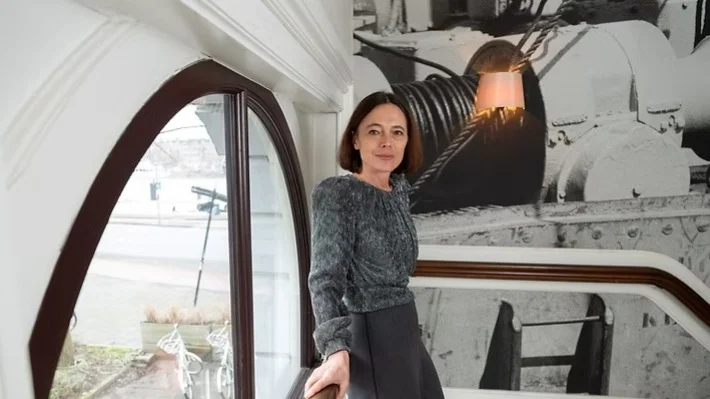
Images by Michelle Muus Photography at Suitehotel Pincoffs, made possible by the PUT-IT-ON platform.
Follow me on Facebook, Instagram, LinkedIn, and visit my website for more information!
Read more from Lidija Poth
Lidija Poth, Transformation Coach
Lidija Poth is a transformative coach with an OTHM Level 7 qualification and accreditation from the Association for Coaching (AC) United Kingdom. She is the founder of MyLifeCoachingHub. With two decades spent shaping urban environments as an architect, urban planner, and educator/mentor at TU Delft, she now channels that strategic insight to empower individuals, executives, highly intelligent professionals, and those recovering from toxic dynamics. Her co-creative approach builds deep trust to unlock personal freedom, authentic leadership, and joy. Through one-on-one coaching, programs, and immersive retreats in Bali and Croatia, she guides clients to reconnect with their true selves and thrive sustainably. Her mission is to ensure that no one is left behind on their journey to becoming their best, most aligned version.
References:
[1] Duvall, E. M. (1957). Family Development. J. B. Lippincott.
[2] Gottman, J. M., & Silver, N. (2015). The Seven Principles for Making Marriage Work. Harmony Books.
[3] Johnson, S. M. (2008). Hold Me Tight: Seven Conversations for a Lifetime of Love. Little, Brown Spark.
[4] Brown, S. L., & Lin, I. F. (2012). The gray divorce revolution: Rising divorce among middle-aged and older adults, 1990 to 2010. The Journals of Gerontology: Series B.
[5] Crowley, J. E. (2018). Gray Divorce: What We Lose and Gain from Midlife Divorces. University of California Press.
[6] Pew Research Center. (2017). Under the leadership of baby boomers, divorce rates are rising for the 50+ population in America.
[7] Schlossberg, N. K. (1981). A model for analyzing human adaptation to transition. The Counseling Psychologist, 9(2), 2-18.
[8] The Gottman Institute. Research summaries on relationship satisfaction after the birth of a first child.
Other articles by Lidija Poth

Inner Wealth Retreat Exclusively for PUT-IT-ON Members
Jun 9, 2026 · 08:03READ MORE
Inner Wealth Retreat July 5, 2026 | Villa LeMaRo, Simonshaven
May 18, 2026 · 08:47READ MORE
Dancing with Feeling and Why We Often Can’t Access Our Emotions and Why It Matters
May 6, 2026 · 09:57READ MORE