

Where does it actually say that my money belongs to me?

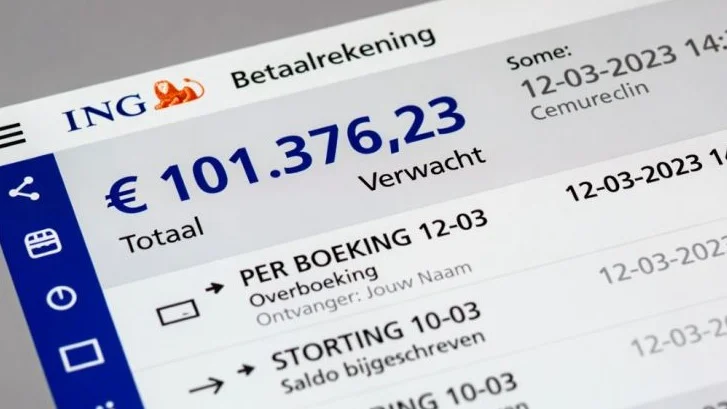
Where does it actually say that my money belongs to me?
There is €100,000 in my bank account. Nice. But where does it actually state that this €100,000 belongs to me?
That sounds like a simple question. Until you think about it for a moment.
My money usually isn't in a safe with my name on it. My shares aren't paper certificates that I keep at home. My property is registered. My pension mostly consists of administrative rights. Even my bank account is ultimately a record in a digital system.
My wealth consists not only of what I own, but also of the records that prove that I own it.
And that brings us to a much more important question:
Who manages the infrastructure on which my property is registered?
That is not a conspiracy theory nor a distrust towards banks or the government. It is a fundamental question about ownership, financial autonomy, and digital dependency.
Because the party managing a registration does not automatically determine who the legal owner is. However, that infrastructure does play a crucial role in access, transactions, transfer, administration, and proof of a financial right.
From possession to digital ownership
Our economy is digitizing at a rapid pace.
Money is processed digitally. Shares are registered digitally. Real estate is managed digitally. Pension rights exist in digital systems. Companies rely on banks, payment networks, data centers, cloud infrastructure, and digital identification.
This also changes the meaning of financial freedom.
In the past, the question was mainly:
How much do I own?
Today we need to add at least three questions to that:
Where is my property registered?
Who manages the registration?
And how independent am I from the infrastructure that gives me access to my own assets?
That last part is becoming increasingly relevant.
Not because our financial system will disappear tomorrow, but because our dependence on digital infrastructure is growing ever greater.
A disruption, cyber attack, geopolitical crisis, or technical blockade can have significant consequences for access to financial services in a modern economy. This makes digital resilience and financial infrastructure no longer solely a technical issue.
It is economic infrastructure.
Who ultimately owns the control?
This creates an interesting paradox.
We constantly talk about personal wealth, property rights, and financial independence.
But an increasingly large part of our assets consists of digital records that function within the infrastructures of banks, financial institutions, governments, and technology companies.
The legal ownership can fully be in your hands.
But the operational access to that property often runs through systems that you do not manage.
That difference deserves more attention.
Want financial autonomy is not just about how much money you have.
It is also about the question:
How robust is the system that allows you to utilize your money, assets, and rights?
The new financial reality
This does not only affect individuals.
For entrepreneurs, it is about bank accounts, payment transactions, share registers, cloud systems, accounting, and digital identity.
For investors, it is about securities registration, brokers, and financial infrastructure.
For governments, it is about digital sovereignty, cybersecurity, and the continuity of vital infrastructure.
And for society as a whole, it is about trust.
Want money is ultimately more than an amount.
Money is a right, established within a system.
And the more digital that system becomes, the more important the questions of who manages it, how it is secured, and what happens when that system is temporarily unavailable become.
Therefore, it may not be the most interesting question:
How much money do I have?
But:
How can I be sure that I can be there tomorrow?
That is not fear.
That is financial intelligence.
And perhaps financial autonomy in the 21st century will ultimately not be determined solely by what you own, but also by how much you understand the infrastructure behind your possessions.
PUT-IT-ON FINANCIAL — Understanding wealth means understanding the system behind it.
#PUTITON #PUTITONFinancial #FinancialAutonomy #FinancialFreedom #Ownership #Wealth #FinancialFreedom #Digitization #DigitalSovereignty #Cybersecurity #FinancialInfrastructure #WealthManagement #Investing #Entrepreneurship #DigitalTrust
Source: Ingrid de Bock
Other articles by PUT-IT-ON Investment
.webp/OwT7Cjhf59eKB9nlcm5KRj1XKsZ5gqq0YZgUkpvi.webp)
Willem Middelkoop: "The big outbreak has yet to begin"
Sep 14, 2026 · 16:58READ MORE.webp/FakPheFiAl4uBB6fAC9nbCbniO2Wd2V99CsTAhJX.webp)
Ray Dalio: I predicted the 2008 CRASH, I know what is coming now!
Sep 13, 2026 · 10:13READ MORE
Netherlands relocates gold reserves: financial resilience takes on a new meaning
Sep 6, 2026 · 09:56READ MORE