

War in Iran, but the gold price does not rise further. Is there going to be a change in that?

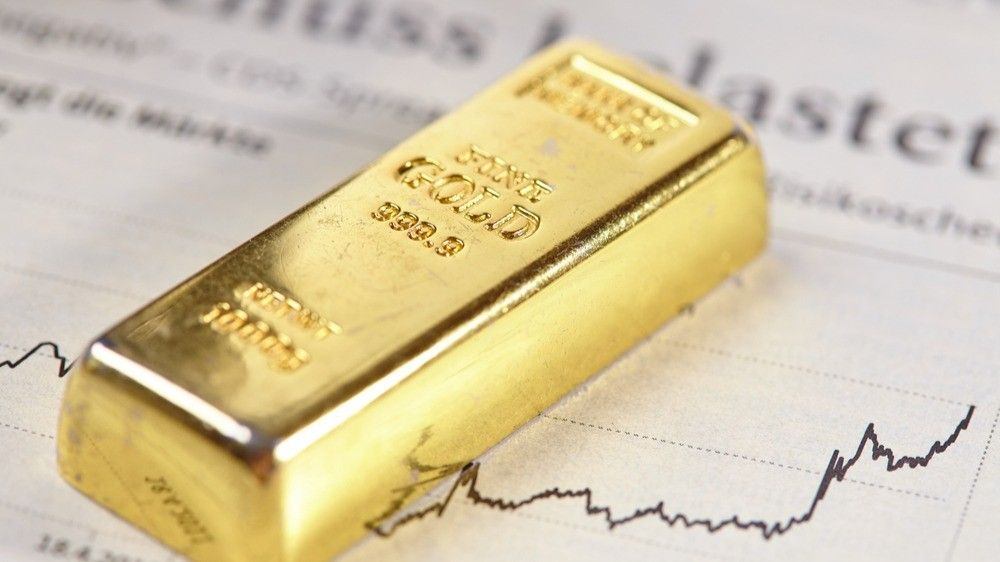
War in Iran, but the gold price is not rising further. Is there going to be a change in that?
The war with Iran is driving up energy prices and fueling global concerns about inflation and economic growth.
In such a climate, you would expect gold to benefit significantly as a safe haven, but it remains relatively calm.
Why isn't the gold price rising much harder? Can the growing interest from institutional investors trigger the next major price increase?
Translate the following text into these languages.
Gold consolidates above $5,000: why isn't it rising (yet) further?
Translate the following text into these languages:
The gold price has been moving sideways recently, well above $5,000 per ounce and €140,000 per kilo. Since the beginning of this year, this still represents a yield of over 20 percent. Nonetheless, the lack of further increase after the escalation in the Middle East raises questions. Rising geopolitical tensions should actually provide strong support for the price of a safe haven like gold. What's going on?

Last week, we wrote about the blockade of the Strait of Hormuz. Bloomberg now calls this the largest disruption ever in the global oil market. Rising energy prices are leading to increased inflation expectations, not only because fueling is becoming more expensive but also because oil and gas impact nearly the entire economy: from transport and production to food prices and industrial processes.
As inflation expectations rise, the likelihood of interest rate cuts by central banks such as the Federal Reserve decreases. Historically, lower interest rates have a positive effect on gold prices, as the precious metal itself does not yield interest. When interest rates decline, the opportunity cost of holding gold decreases, making it relatively more attractive compared to interest-bearing investments for investors.
A second explanation for the lack of further increases in the gold price is liquidity. In times of heightened uncertainty, investors often seek additional liquidity. Gold is frequently used to free up cash, meet margin calls, or rebalance portfolios.
Translate the following text into these languages (en: English, nl: Dutch, zh: Mandarin Chinese, es: Spanish):
Will the gold price continue to rise?
According to Ole Hansen of Saxo Bank, it is too early to assume that the Federal Reserve will not lower interest rates further. Higher energy prices are indeed contributing to additional inflation, putting the inflation target under pressure, but they can also lead to weakening economic growth and employment. This could result in stagflation. Policymakers are thus faced with a dilemma: to combat inflation or to support economic growth. In such a scenario, the Fed may ultimately be forced to accommodate the economy with lower interest rates among other measures.
Translate the following text into these languages (en: English, nl: Dutch, zh: Mandarin Chinese, es: Spanish):
Ole Hansen also writes that, although the gold price may face some headwinds in the short term due to the above factors, the structural drivers behind the strong demand for gold remain intact. The geopolitical tensions and ongoing budget deficits, which keep investors concerned about purchasing power and currency value, persist. In fact, in the case of a prolonged conflict, budget deficits could rise even faster. Governments will incur additional debt due to higher defense and energy costs. Central banks may then be forced to ease their policies to keep a rising debt burden manageable.
Additionally, the demand for gold from central banks remains an important pillar supporting the market. Hansen therefore expects that the gold price may rise to $6,000 per ounce in the coming quarters, and that silver could test the $100 threshold again. Bank of America has also recently set a twelve-month price target of $6,000 for gold.
Translate the following text into these languages.
Institutional investors discover gold
According to Michael Widmer, head of commodities research at Bank of America, there is an additional reason to remain positive about gold: he believes that investor allocations are still relatively low. That seems to be slowly changing; institutional investors are discovering gold. We recently wrote an article about it.

Institutional investors are increasingly viewing gold not just as a niche position but rather as an integral part of strategic portfolio construction. While the classic 60/40 portfolio, comprising 60 percent equities and 40 percent bonds, has dominated for years, interest in gold is now growing. Among others, Morgan Stanley has pointed out that bonds provide less protection than before in an environment of high inflation and low real interest rates. In 2022, both equities and bonds fell simultaneously, rendering this traditional risk diversification ineffective. Even a modest shift of institutional capital towards gold could create significant additional demand, given the relatively small size of the gold market.
Translate the following text into these languages.
This week, an interview with such an institutional investor appeared in Het Financieele Dagblad. Thomas van Galen, chief strategist at Achmea Investment Management, states that a fundamental change has occurred: "The period in which markets could count on a structurally stable environment is over, just like the certainty of low inflation, free world trade, and free movement of capital."
Translate the following text into these languages.
He notes that the independence of central banks has become less self-evident and sees the risk of fiscal dominance, where central banks maintain low interest rates to keep government debts manageable. He also views the shift from a unipolar to a multipolar world order, with more inflation shocks and instability, as a significant factor for the coming years.
Please provide the text you would like to have translated.
He doubts the safety of bonds as an investment in a time of high inflation threat and their role in risk diversification: "A number of old certainties no longer hold. For instance, the age-old correlation between stocks and bonds has been broken (when stocks decline, bonds increase in value). Both decline during times of stress."
Translate the following text into these languages.
Van Galen therefore advocates for more robust portfolios with real assets such as real estate, infrastructure, commodities, and gold.
We can conclude that the gold price may experience some headwinds in the short term, but in the long term, it still has the wind at its back.
Translate the following text into these languages
Cash in Swiss Constitution
Just a short message from Switzerland. Regular readers of the weekly selection may remember that we wrote in June last year about a possible referendum in Switzerland to constitutionally protect cash. That referendum has now taken place: the preservation of cash is enshrined in the Swiss Constitution.
Last Sunday evening, it became clear that 73.4 percent of voters approved the amendment. The Swiss voted on two separate proposals regarding cash. The citizen initiative 'Cash is freedom' from the Swiss Movement for Freedom (MLS) received 46 percent of the votes but did not achieve a majority. Therefore, the parliamentary counterproposal received broad support.
This means Switzerland joins countries like Hungary, Slovakia, and Slovenia, where the right to physical cash is also enshrined in the constitution. Proponents see this as an important step to protect privacy and financial autonomy, especially at a time when central banks are working on the development of a digital currency (CBDC).
Other articles by PUT-IT-ON Investment
.webp/OwT7Cjhf59eKB9nlcm5KRj1XKsZ5gqq0YZgUkpvi.webp)
Willem Middelkoop: "The big outbreak has yet to begin"
Sep 14, 2026 · 16:58READ MORE.webp/FakPheFiAl4uBB6fAC9nbCbniO2Wd2V99CsTAhJX.webp)
Ray Dalio: I predicted the 2008 CRASH, I know what is coming now!
Sep 13, 2026 · 10:13READ MORE
Netherlands relocates gold reserves: financial resilience takes on a new meaning
Sep 6, 2026 · 09:56READ MORE