

Fighting inflation: raise interest rates or stop money growth?

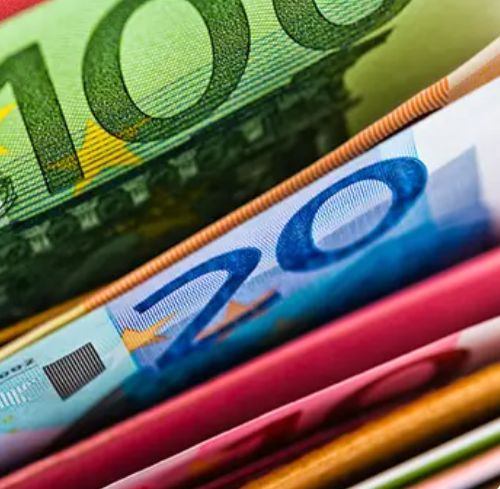
Fighting inflation: raise interest rates or stop money growth?
Combating inflation: raise interest rates or stop money growth?
The fight against inflation worldwide almost always revolves around the same recipe: raising interest rates. Central banks increase interest rates as soon as inflation exceeds the magical threshold of 2%.
But what if that medicine mainly addresses the symptoms and not the real cause?
Please provide the text you need to translate.
In Argentina, exactly the opposite of what many economists predicted happened. Since the arrival of President Javier Milei in December 2023, interest rates have been significantly lowered several times.
According to traditional economic theory, this should have led to an explosion of inflation. However, something remarkable happened: inflation fell from over 211% to around 30% in 2026.
Dat zet een fundamentele vraag centraal: ontstaat inflatie echt door lage rente, of ligt de oorzaak veel dieper in het financiële systeem?
Please provide the text to be translated.
What inflation really means
Most people know inflation as rising prices for groceries, energy, or housing. But price increases are actually the result, not the cause.
Inflation occurs when the amount of money in an economy grows artificially and the purchasing power of a currency diminishes.
Please provide the text to be translated.
This principle has existed for thousands of years. In the Roman Empire, this happened with the famous denarius. Emperors melted silver coins and mixed them with cheaper metals.
This allowed for the production of more coins without adding any real economic value. The result? The currency lost value and prices soared.
Today, the same thing happens in a modern way through money creation, debt financing, and the purchasing of government bonds by central banks.
More money in circulation without proportional productivity growth ultimately means less purchasing power per euro or dollar.
Insert text here
Why higher interest rates don't always work
Central banks use interest rate hikes to curb consumption and investments. Less borrowing means less money circulation and therefore less pressure on prices.
Op papier klinkt dat logisch.
However, interest rates are inherently a market signal. They reflect what is known as time preference: do people choose to consume now or save for later?
When saving behavior increases, interest rates naturally decrease.
Companies will then receive the signal that long-term investments are becoming more attractive.
Please provide the text to be translated.
When central banks artificially manipulate interest rates, critics argue that they are disrupting the natural functioning of the economy.
Austrian economist Ludwig von Mises once compared this to a motorist who hits someone and then thinks they can repair the damage by driving back over the victim.
Higher interest rates can temporarily slow down inflation but simultaneously put pressure on investments, economic growth, and financial markets.
It addresses the consequences, while the core of the continuous growth of the money supply remains.
Please provide the text you want to translate.
The role of money growth in inflation
Increasingly, economists are pointing to the growth of the money supply as the real engine behind inflation.
As long as central banks continue to create new money and finance government debt, purchasing power will remain under pressure.
Beleid dat zich richt op het stoppen van kunstmatige geldgroei zou volgens deze visie veel effectiever zijn. Denk aan:
This type of measures could reduce inflation without disturbing the natural price formation of interest rates, wages, and investments.
Argentina as an economic experiment
The Argentine policy shows why this discussion is more relevant than ever. Under the leadership of Minister of Economy Luis Caputo, a budget surplus was achieved for the first time in 14 years.
At the same time, the economy grew with solid figures.
Please provide the text to be translated.
According to economist Daniel Di Martino, the inflation figures in Argentina follow the development of the money supply surprisingly closely. This could explain why inflation has dropped significantly despite interest rate cuts.
While many central banks focus on symptom management through interest rate policy, Argentina seems to be addressing the root of the problem: monetary expansion and government spending.
Please provide the text to be translated.
Conclusion
De economische discussie rondom inflatie verschuift langzaam van rente naar geldgroei. Prijsstijgingen zijn niet automatisch de oorzaak van inflatie, maar vaak het zichtbare gevolg van een groeiende geldhoeveelheid.
Raising interest rates can provide temporary relief but also brings economic damage. Policies aimed at limiting artificial money creation seem to be more effective in structurally protecting purchasing power without unnecessarily slowing down the economy.
Translate the following text:
The developments in Argentina show that addressing root causes may work more effectively than the traditional symptom management of central banks.
Thus, one question is becoming increasingly relevant for investors, entrepreneurs, and consumers worldwide:
Should inflation be combated with higher interest rates or with less money creation?
Translate the following text:
PUT-IT-ON Financial
#Inflation #Economy #FinancialNews #InterestRates #CentralBank #Argentina #JavierMilei #MoneyGrowth #MonetaryPolicy #Investing #FinancialFreedom #EconomyNews #PurchasingPower #Capital #Investing #Macroeconomics #FinancialMarkets #DebtCrisis #MonetarySystem #PUTITON
.webp/OwT7Cjhf59eKB9nlcm5KRj1XKsZ5gqq0YZgUkpvi.webp)
.webp/FakPheFiAl4uBB6fAC9nbCbniO2Wd2V99CsTAhJX.webp)