Building on OMFIF’s long-run analysis on the ‘Seven Ages of Gold’, a report on ‘Gold and the new world disorder

Building on OMFIF’s long-run analysis on the ‘Seven Ages of Gold’, a report on ‘Gold and the new world disorder
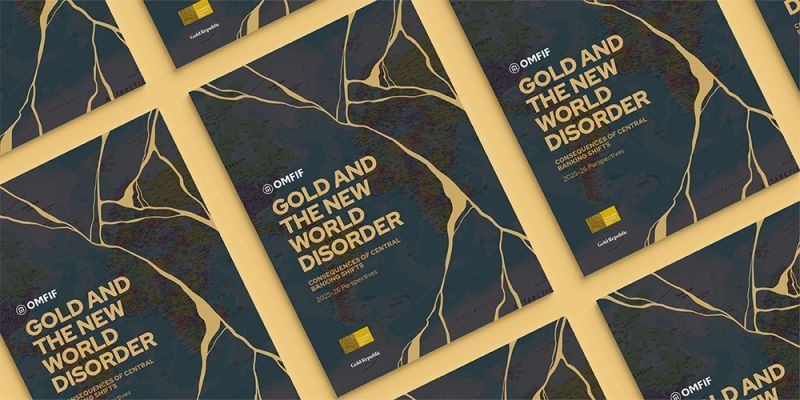
Building on OMFIF’s long-run analysis on the ‘Seven Ages of Gold’, a report on ‘Gold and the new world disorder’, published today in partnership with Commodity Discovery Fund and GoldRepublic, explores new developments in central bank gold policies. Link : https://www.omfif.org/gold-and-the-new-world-disorder/
The report explains the reasons why central bank gold purchases have surged, with countries as wide-ranging as the Czech Republic, Hungary, Ireland, Poland, Qatar and Singapore joining traditional buyers such as the central banks of China, Turkey and India. Click here to view the report: https://lnkd.in/eBZraBNa
Gold is now back in vogue among central banks worldwide as the ultimate safe asset. The war sparked by Russia’s full-scale invasion of Ukraine in February 2022 has
propelled a sharp and apparently self-feeding increase in the number of central banks purchasing the yellow metal. This has spread well beyond China, Russia and other countries
interested in setting up alternative systems to the dollar-based monetary order.
The driving force behind central banks’ gold purchases has now widened into a broader desire for asset diversification, together with some qualms about a weakening of the dollar’s longer-term international role.
Building on OMFIF’s long-run analysis on the ‘Seven Ages of Gold’, a report on ‘Gold and the new world disorder’, published on 11 December in partnership with Commodity Discovery Fund and GoldRepublic,
explores new developments in central bank gold policies. In the latest stage of gold reserve trends over the past 200 years, central banks are reverting to a historical pattern enshrining gold’s role as a safe asset.