3 steps to better remember according to a 2000-year-old method
3 steps to better memory according to a 2000-year-old method
Please provide the text you would like to translate.
3 steps to better memory
according to a 2000-year-old method
Translate the following text into these languages
Ik heb het fortuin gehad dat leren mij relatief makkelijk af is gegaan. Echter toen ik op de universiteit kwam, merkte ik dat ik met de manier van onthouden er niet mee weg kwam.
I would have loved to have these steps during my studies. This way, I could have definitely saved a couple of years.
This article describes a method that was used 2000 years ago to remember information so that it could be recalled later.
Do you want to skip the part about how your brain works,
Please provide the text to be translated.
How do you remember things better?
To remember better, you need to know how your brain stores information. Then you present to your brain what you want to remember in a memory-friendly way.
To remember better, you need to know that you have a short-term memory and a long-term memory.
Wanneer je nu gaat blokken, dan zul je binnen 24 uur zo’n 70 tot 80% van wat je geleerd hebt weer vergeten. Binnen een maand tijd is dat zelfs 97 tot 98%.
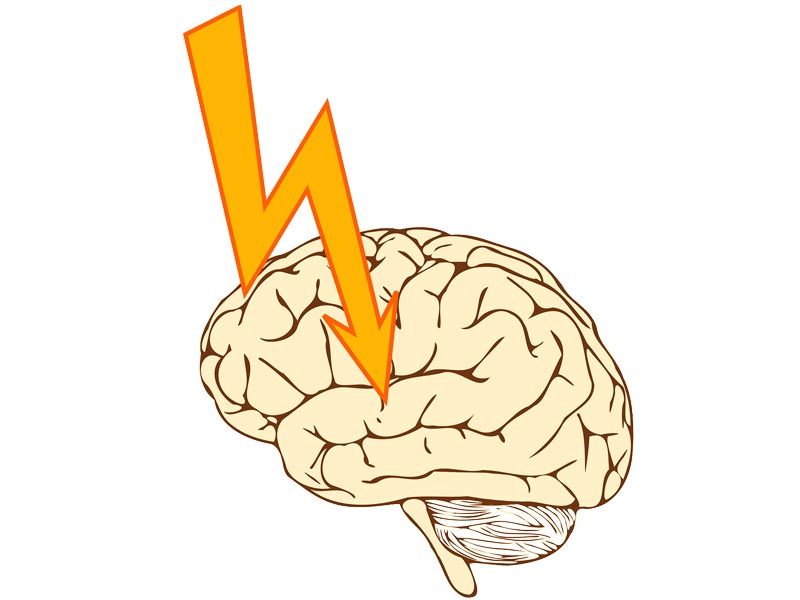
short-term memory
Memories in your short-term memory are of an electrical nature.
Have you ever experienced being in the attic and needing to grab something from the kitchen? And as soon as you enter the kitchen, you completely forget what you went in to get?
And as soon as you enter the kitchen, do you completely forget what you went there to get?
That was your short-term memory: when you thought of something else, what was inside got erased.
long-term memory
The long-term memory can be compared to a gigantic warehouse or store.
Unfortunately, the warehouse is completely dark and an explorer sometimes has to search for a long time to find something.
Heb je weleens meegemaakt dat je op straat loopt en diegene begroet je enthousiast, maar je hebt geen idee meer wie het is?
The first question you probably ask yourself is ‘who is that?’.
Then you ask yourself ‘where’ you know that person from.
Your long-term memory loves locations!
If you have a location, your brain can form many connections and you can find things more easily.
Daarom:
Als je namelijk weet waar je die persoon die hallo zegt ook alweer van kent, dan kan de verkenner veel gerichter zoeken. Er gaat dan als het ware een lampje aan en daar rent je verkenner snel heen.
Good memory is not insight
Better remembering does not mean that you have any insight into the matter. However, factual knowledge is much more important than people think.
For example: Learning a new language. Imagine you want to learn a new language and you do this by studying the language. After months of studying, you know exactly how the grammar is structured.
Vervolgens ga je naar dat land en je kunt de taal totaal niet spreken. Je verstaat niet eens wat de mensen zeggen. Daar heb je feitenkennis voor nodig, oftewel de vocabulaire.
Conversely, it is exactly the same. If you know all the words in that language but have no insight into how the sentence structure, present or future tense works, then you will not be able to speak the language.

Techniques for Remembering
The most well-known techniques for remembering:
However, there are even more possibilities, such as the techniques used by the ancient Greeks and Romans.
When you want to remember information through repetition, you repeat it in your short-term memory so many times until the brain makes a chemical connection.
You will need to repeat everything you want to remember for the rest of your life at least 300 times; you need to spread this over 7 different moments.
Memory techniques for remembering
You can also make use of memory techniques. Here, we look at how long-term memory retains information.
Dat betekent: Als ik aan je vraag wat je gisteren voor lunch had, dan denken je hersenen terug naar ‘waar’ je was. Er is een draadje gespannen tussen ‘waar’ je was en ‘wat’ je lunch was.
But: That thread is not strong enough yet and can be easily broken.
To repeat again to remember better?
If you don't think about the information for a long time, your brain will clear that big mess. Everything you often need will be placed at the front so you can easily and quickly access it.
Wat je niet vaak gebruikt zetten ze ergens achterin en dan moet je lang zoeken. Wil je iets actueel laten zijn, dan zul je het dus eens in de zoveel tijd een keertje moeten gebruiken. Dan laten je hersenen het vooraan staan zodat je er makkelijk bij kan.
Niet stampen, gewoon een keertje activeren door eraan te denken.
Heb je weleens meegemaakt dat je iemand op televisie ziet en niet op de naam kunt komen? Dan gaat je verkenner op zoek in die grote loods, maakt alle kastjes en laatjes open. Een paar dagen laten loop je over straat en ineens weet je de naam weer. Dat is het moment dat je verkenner het juiste kastje opende in die grote loods en het vond.
Had hij geweten waar ergens hij moest zoeken, dan had je het veeeeeeel sneller gevonden.
What is a memory palace?
A memory palace is a 2000-year-old method for perfect recall.
The memory palace has different names:
Fear of paper: When the use of paper for writing things down became popular, Socrates (an ancient philosopher) feared that this would mean people would remember less and ultimately not know how to remember.
He wasn't far off, but fortunately, paper (now computers and the internet) also has incredibly many advantages. We revisit the history of the memory palace through two people: Cicero and Simonides.
Cicero
In ancient Rome, Cicero was a statesman. He is one of the few ancient Romans whose many written texts have survived. So we are fortunate to have his writings (sorry Socrates).
Cicero could talk for hours and knew all the facts by heart. To achieve this, he used the memory palace. In one of his texts, he wrote about its origin. He credited a Greek poet named Simonides of Ceos.
Simonides of Ceos
Simonides was invited to recite poetry at the banquet of a very rich man. Everyone was sitting at the table eating when Simonides began his poetry reading.
The Greek Gods:
As usual, Simonides mentioned the Greek gods, and the owner of the house found this nonsense. After reciting various poems, the wealthy man stated that he would not pay Simonides anything. If he wanted to be paid, then those gods should pay him.
Watch out what you wish for!
Toen kwam een bediende aanlopen en zei tegen Simonides dat er iemand voor hem aan de deur stond. Toen Simonides buiten kwam was daar niemand, maar achter hem stortte het stevige huis zonder enige aanleiding plotseling in.
Simonides had de betaling van zijn goden gekregen…
However, this is not a story about religion, but about memory:
The memory palace was born
This is how a memory palace works:
Since Simonides had linked the person to the place (Loci), he could accurately remember who each guest was.
And thus the Roman Room System was born, or the use of a Memory Palace.
In each memory palace, the following was used:
And scientific research…?
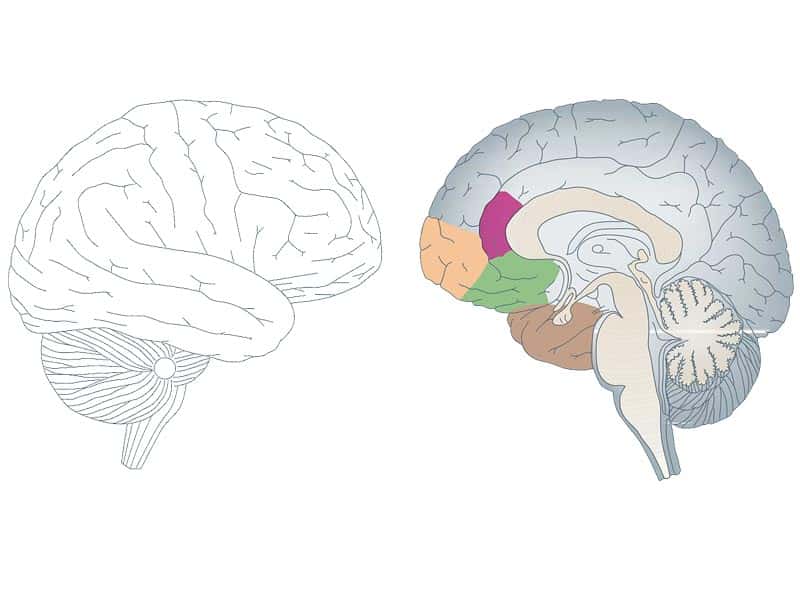
Recent wetenschappelijk onderzoek naar de hersenen heeft laten zien dat het gebruik van een geheugenpaleis inderdaad de manier is om veel makkelijker te onthouden.
I have combined this old memory technique with recent insights into how the brain works to make remembering even easier.
Why should you use a memory palace?
When I first learned about the memory palace, I wondered why I would want to create a memory palace at all.
Dit betekende namelijk dat ik locaties moest gaan kiezen, ervoor zorgen dat ik ze goed ken, routes verzinnen, alles wat ik wil onthouden omzetten in plaatjes en dat weer op de route zetten.
That seemed to me like ridiculously a lot of work, and why?
Therefore: If you only want to remember a few things, you can easily manage with some repetition.
But imagine you want to memorize thousands of things. If you want to do it quickly and remember it for a long time, then you need a memory palace.
Johannes Mallow perfectly remembered 132 event data in 5 minutes at the championships in 2011.
Different memory techniques
There are various memory techniques, and you don’t always need a memory palace.
A photographic memory
What you absolutely do not want to have is a photographic memory! However, do not worry, because it does not actually exist. Many people think that eidetic memory is a photographic memory, but you should not want that either. With a 'photographic memory', your brain cannot distinguish between what is important and what is not, and thus it also does not forget the unimportant.
You would literally go crazy from all the millions of pieces of information that come to your brain every second.
Remember via linking
Toen Frans Duijts Katja Schuurman leerde om namen te onthouden voor haar televisieprogramma Katja’s Bodyscan is er geen gebruik gemaakt van een geheugenpaleis. Dat is ook totaal niet nodig en zou onnodig veel werk geweest zijn.
It was sufficient to link the name to the person's appearance.
Zo wist Katja Schuurman bij de test 48 voor- en achternamen van 50 mensen perfect te onthouden.
Ook bij Katje Retsin in België hebben we de namen aan het uiterlijk gekoppeld. Ze wist de voor- en achternamen van de bezoekers van een live uitzending op televisie perfect te onthouden.
I taught Niek Roozen to remember vocabulary for the show Britt and Niek on Topic. Again, we did not use a memory palace this time. Of all the words (German, French, English) he had to remember, he made only one mistake on the test.
Translate the following text into these languages (zh: Mandarin Chinese, es: Spanish, ar: Arabic, fr: French, de: German, pt: Portuguese, ja: Japanese, ru: Russian, hi: Hindi, th: Thai, en: English):
When do you use a memory palace?
When you want to do one of two things:
Bij namen onthouden was het gezicht namelijk de ‘trigger’ tot de naam van de persoon. Hadden de Katja’s echter moeten onthouden wie er allemaal aanwezig waren bij de test en dit opnoemen zonder iemands gezicht te zien… dan hadden ze gebruik moeten maken van een geheugenpaleis. Dat is dan waar we alle namen zouden hebben opgeslagen.
What can you remember with a memory palace?
In principle, what you can store in a memory palace is endless. But just to give you an idea, here are some examples:
Maar even voor je beeldvorming heb je hier wat voorbeelden:
How to create a memory palace to remember better
The creation of a memory palace consists of 3 parts. The last part is the construction of the palace itself.
Step 1.
Create your memory routes
Step 2.
Create memory cards
Step 3.
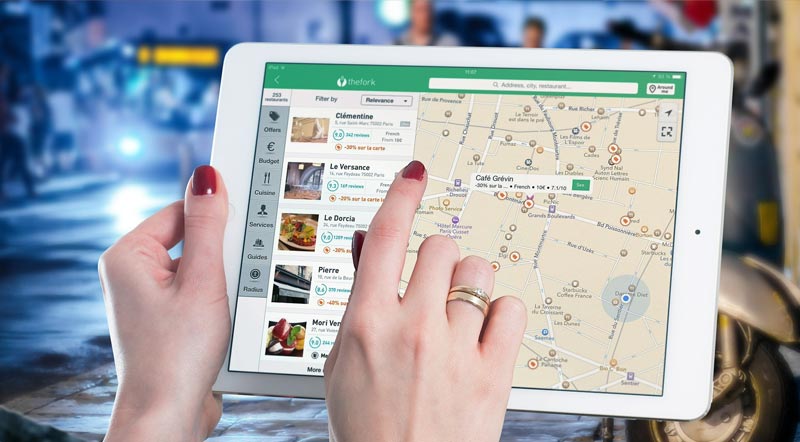
Place images on your route
Step 1. Create your memory routes
A memory route is nothing more than a path that you take in your mind from one place to another.
This can be inside a house, outside on the street, or a combination of both.
Make your own memory route now
First, determine what you want to remember. To create a good memory route, you first need to know what you want to remember.
If you know what you want to remember, then you need to know how you want to activate it. In other words, in what order do you need to know it later or what should you think about to retrieve it?
We associate a name with a face because the next time we see that person, we want to remember the name again.
We associate the sound of a foreign word with its Dutch meaning, as in a test you will receive one of the two and need to write down the other.
Choose a location now

Based on what you want to remember, choose a location you know. Rest assured, you already know thousands and thousands of places.
Imagine you are reading a book about first aid and you want to remember some steps.
Then you choose a location based on the topic. This could be a hospital, for example.
This is essential!
Heb je een locatie, dan bepaal je een vertrekpunt vanaf waar je route begint. Zelf doe ik dit door mezelf de vraag te stellen waar op die locatie ik met een groep mensen zou afspreken.
In the hospital that I have in mind, that would be the revolving door at the entrance. How much do you need to remember? Before you start remembering, look first at how much it is. We are working with a route, and you need to know how long that route should be.
Suppose we are talking about first aid and what you want to remember consists of 6 steps. Then these are the 6 steps you want to remember.
Now you create the memory route yourself
You now have a location with a starting point, and you know how much you need to remember. Now you can easily come up with a route with the same number of places.
Dus weer even terug naar het onderwerp EHBO:
I place the specific topic first. Then come the facts / steps that I want to remember. This means that I need 6 more places after the revolving door.
For example:
So you'll quickly have plenty of places!
We call each place a Loci. This is pronounced 'loki'.
Step 2. Create memory cards
When you have a memory route, you can place the information you want to remember anywhere. Of course, we do it in a memory-friendly way.
A picture is worth a thousand words!
Not everyone agrees, but in the world of memory, it is incredibly true.
Translate the following text.
Think in images
Many things we want to remember are very abstract.
That's why we turn them into a tangible image.
What is a memory module?
A memory image is nothing more and nothing less than a tangible image that you create in your mind of what you want to remember. Imagine you meet someone named Jasper and you need to convert his name into an image; you can do this by picturing it as a 'jacket'.
This memory image will remind you of his name.
How to make a memory plate
If you need to make images from the words in the following list, it's very simple: shoe, television, lamp, car, carpet, brick, strainer, grass, sock, banana, and carnival. These words are already very vivid.
Het is lastiger wanneer de woorden of feiten die je wilt onthouden abstract zijn. Bij woorden die abstract zijn maak je een plaatje door:
De naam Bella betekent mooi, maar het woordje mooi is nog steeds niet tastbaar. Echter in de naam zit ook het woordje ‘bel’ en daar kun je wel makkelijk een testbaar plaatje van maken.
De naam Ramchandra is heel erg abstract, maar kunnen we op dezelfde manier omzetten. Ken je iemand die Sandra heet, dan kun je voorstellen dat ze op een ram rijdt (net als paardrijden, maar dan een ram)
To create good memory images, you need creativity! That is also one of the most important parts of my training.
Let op: We willen een dubbele codering!
Dit betekent dat elke woord een plaatje oproept, maar dat het plaatje andersom ook het juiste woord oproept.
If you need to remember the word 'truck driver' and you create an image for it, then it is likely that when you think of the image, you will want to say 'truck driver'.
Maak de plaatjes helder genoeg, want je wilt niet wat mij overkwam: ik noemde iemand heel enthousiast Jack terwijl z’n naam Jasper was. Ezelsbruggetjes maken is niet hetzelfde als een geheugenplaatje. Ezelsbruggetjes zijn iets heel anders dan geheugenplaatjes. Je kunt ze echter wel omzetten naar een geheugenplaatje.
Many students remember the Wadden Islands through TVtas. However, during a test, they wonder what the mnemonic was.
Imagine that you create a memory picture that you link to a location; then it becomes super easy. You are on an island, you stumble, and your TV bag falls into the water.
Bring your memories to life
Storytelling is vandaag de dag heel hot en er worden massa boeken over geschreven. De oude Grieken en Romeinen waren ons allang voor, dat is namelijk wat zij juist deden.
Organize it logically
What is logical depends on you and what you want to do with the information.
Stel je wilt een presentatie geven, dan moet je het eerst op een manier neerzetten dat het logisch is om te presenteren. Pas daarna gaan we het op de geheugenroute zetten om het uit het hoofd te onthouden.
How much information can you store per memory chip?
You can easily store multiple pieces of information in one memory slot. For example, I myself create 1 memory slot from 6 digits. With only 3 memory slots, I can already remember 18 digits in order.
If you want to merge images, in my experience it's best to keep a maximum of 5 images. Fewer is fine, but with more you'll forget things.
Een totaal verzonnen voorbeeld met 4 stukjes informatie:
Step 3. Place images on your route
You now have a location and your memory cards. Now you just need to place them on your memory route.
Place memory cards on your memory route
By placing it in one spot, we connect that spot with the picture we set down. Just putting it down will help you remember a few things better, but you'll quickly forget the rest.
What you want is that thick steel wire so that your explorer can easily access it. You do this by adding emotion.
Stel de eerste van de 6 EHBO stappen is mond op mond beademing en je start bij de ballonnen, dan voeg je nu emotie toe. Dan kun je het grappig maken: Iemand geeft mond op mond beademing want hij denkt dat die persoon stikt, maar het blijkt gewoon een ballon te zijn die hij beademt en iedereen om hem heen denkt nu dat hij de ballon zoent.
of
You want to remember who is in your class and Bella is one of them. That's why you chose your school and at the school gate you see Bella standing there. She wants to open the gate with her foot and is wobbling on one leg while being blindfolded, with a Bosche Bol in her hand and...
Can you remember the rest of the story? 😉
Gebruik dus veel emoties om het plaatje te KOPPELEN aan de plek (loci) op je route en beter te onthouden. Zo maak je er een geheugenpaleis van.
Eén boom is maar een boom. Heb je er velen, dan is het een bos.
Eén geheugenroute is maar één route. Heb je er veel, dan kun je er een geheugenpaleis van maken.
You have two options to turn it into a palace:
1. Madurodam / Efteling:
Bij deze optie maak je als het ware in gedachten maquettes. Bijvoorbeeld het ziekenhuis of je school. De maquettes van de locaties groepeer je en geef je in gedachten een plekje.
Just like Madurodam has brought together various buildings from across the country.
2. Teleportatie:
De teleportatiestijl gebruik ik zelf. Waarom? Nou, ik vind het gewoon leuker.
Example: I have two bank accounts. One personal and one business account. I mentally noted the numbers on my bank card at the reception of my bank (subject and location).
If I now imagine walking through the door behind the reception, I find myself in thought at the entrance of my business bank. I have also made a link to other routes:
I pick up the phone at the reception, and suddenly I'm in the Town Hall, moving from the topic of 'money' to 'personal data,' or my ID card.
Don't you know what I mean by teleporting and the example with the phone? Then watch the movie The Matrix!
Beter onthouden in de praktijk brengen
Once again: do you dare to remember perfectly? Perhaps I could better ask you: are you willing to put in the work to create your own memory palace so that you can remember everything perfectly?
Other articles by Cor Van Drieberge