
When did LinkedIn stop being “the world’s largest professional network
Source : Alessio Di Ciero
We read this quit often !

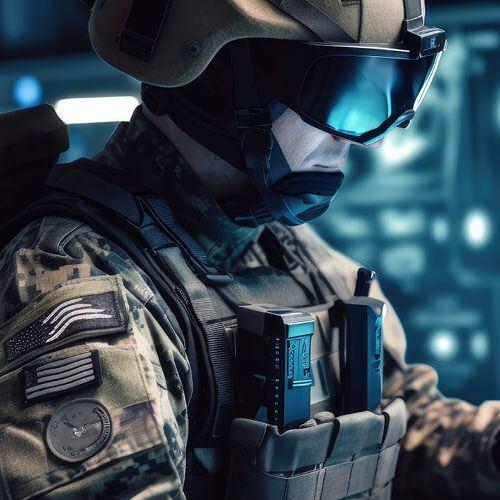
AI joins the armed struggle. The Dutch armed forces also want to outpace opponents with data and algorithms. The 'Defense Strategy Data Science and AI 2023-2027' must ensure that the armed forces can use relevant information faster and better. However, the road to this end is not easy. What are the challenges? What does a target look like? Is it responsible to attack the target? And where should the missiles land? In the war with Hamas, the Israeli army leaves the answers to these questions to an AI system that makes its own risk assessment. The system is called Habsora, Hebrew for 'gospel' or 'good news'. By feeding all kinds of data to the system, it learns what a Hamas fighter looks like. This data is collected, for example, by unmanned drones that fly above the Gaza Strip. The identified target is then forwarded to the Israeli army, which coordinates the attack. Role of AI is increasing AI has long played an important role in the military, such as simulating combat situations, carrying out unmanned transports, evacuating victims, or in cybersecurity. The use of semi-autonomous weapons, drones and public sources to strengthen the information position makes military operations high-tech. Within a few seconds you will have a complete picture of the enemy on your screen. We also see practical applications of data science and AI in the Netherlands.
Consider automatic deployment and maintenance planning for the air force and navy, automatic image recognition for the army and military police and dashboards for displaying reports for the Defense Safety Inspectorate. These technologies have also become indispensable in police work and fire brigades. For example, the IJsselland Fire Department now has a reconnaissance and extinguishing robot. Common challenges The Dutch armed forces will invest heavily in data science and AI in the coming years. The focus is on unmanned autonomous systems and (military) decision support and intelligence, logistics and predictive maintenance, operations and safety. “All in all, the goal is to use relevant information faster and better than our opponents at any desired level for the optimal deployment of the armed forces,” states the Defense Strategy Data Science and AI 2023-2027. This strategy also contains a warning. “There are common challenges that require an integrated approach.” We mention a few:
1. Complexity of data management Processing data sources into management information improves and accelerates operational actions. The downside is that organizations need to manage and share increasing amounts of data, often sensitive data. An 'information overload' is soon lurking. Defense has already initiated the necessary actions to keep the large amounts of data manageable. For example, the organization invests in the development of a highly classified IT infrastructure for data sharing and processing. In addition, standardized protocols and a secure, reliable cloud infrastructure, for example, enable extensive data exchange.
2. Quality of data “We can deal with screens that go black. But if incoming data is incorrect, it can have disastrous consequences,” said Jude Sunderbruch, director of the US Department of Defense Cyber Crime Center, recently during the Google Defense Forum. If you make tactical and strategic decisions based on data, you must be able to fully rely on that data. Especially in war situations. Robust validation and verification processes are crucial to ensuring data quality. This includes continuous monitoring, data cleaning and the use of advanced algorithms to detect and correct inconsistencies, with a focus on data integrity and accuracy.
3. Compliance with laws and regulations Laws and regulations have always been an important theme within the sector, and the use of data science and AI takes this even further. Defense and other government organizations are expected to ensure that the implementation of new technologies is transparent and that the results can be explained. The use of AI must be ethically and legally correct. The aforementioned strategy therefore provides for the development of a framework of standards in which algorithms can be tested by means of an audit. In addition, frameworks and guidelines are being developed to document the operation of an algorithm, the choices made and its use in the workplace.
4. Attracting knowledge and skills Optimal use of data science and AI requires employees with specialist knowledge and skills. However, according to the Defense Strategy Data Science and AI 2023-2027, there is 'limited capacity to achieve Defense's ambitions'. Attracting the right people is a major challenge. Defense already sounded the alarm a few years ago. The need for IT capacity for business operations, data (science) and cybersecurity is particularly great. According to Defense, this need cannot be met in the short term. A Data Science Center of Excellence at the Dutch Defense Academy should provide relief. Technologies such as data science and AI are finding a place in military training and research. A professor of Data Science must ensure this.
5. Guaranteeing sovereignty Keeping IT as sovereign as possible is becoming an increasing challenge for critical users within the public sector. The growing dependence on major tech players and the increasing integration of cloud services means organizations must carefully balance between leveraging technological benefits and maintaining autonomy. Too much dependence can jeopardize resilience and autonomy in the event of failure, limited accessibility or other disruptions. Developing strategies and capabilities to ensure IT sovereignty is therefore important for operational continuity and security.
Pure Dutch “As a purely Dutch company with a strong cultural fit with our customers, we have a deeply rooted mission to keep the Netherlands safe,” says Michiel Hogenboom, VP Public a.i. and Public Critical at KPN. “That is our responsibility. Sovereignty is paramount. A safe Netherlands should not be dependent on foreign factors.” “KPN stands side by side with critical users such as Defense, police, fire brigade and Rijkswaterstaat,” Hogenboom continues. “Together we use advanced technology to respond faster and more effectively in emergency situations, where our joint efforts are crucial for national security.”
We'll send you a nice letter once per week. No spam.