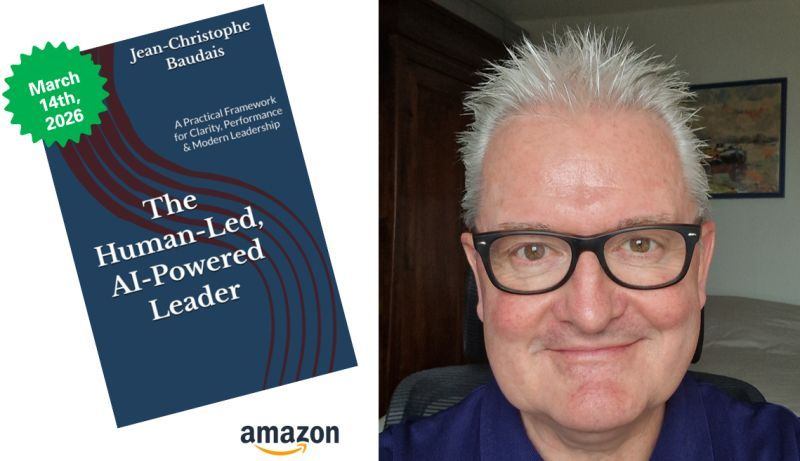
Some things take years to build. This one took thirty.
In two days, The Human-Led, AI-Powered Leader will be live on Amazon.


Leaders play an instrumental role in building organizational trust—a role that’s increasingly challenging and important amid today’s constant disruption. Research from Gartner suggests that organizations that empower leaders to articulate...more
Trust is an invaluable commodity that’s critical for organizational success. Yet it can be elusive. The challenges of the moment—rapid policy changes, continued economic uncertainty, and more—only increase the pressure on leadership. Facing headwinds like this, a solid foundation of employee trust can give companies an important edge. Without it, though, they can find themselves less prepared to weather these storms.
As it stands, many leaders are on shakier ground than they might think. Last year, Gartner surveyed more than 3,500 employees about trust at their organization and found that less than half (48%) trust their senior leaders. Because the overall environment isn’t likely to get less volatile anytime soon, we believe leaders will be facing this critical challenge for the foreseeable future: How can they make tough strategic decisions while also maintaining an engaged and trusting workforce?
In our research, we’ve found four important actions leaders can take to build employee trust—and others they should be sure to avoid.
Trust in Leaders Affects Employee Engagement
The 2024 Gartner Organization Structure and Leadership Trust Survey showed that employees who trust senior leaders at their organization are significantly more engaged compared to employees who don’t, highlighting how the presence (or absence) of trust can significantly affect talent and business outcomes. Employee engagement measures an employee’s positivity or negativity regarding their organization and role. It’s measured here on a 0–100 scale where 0 indicates strong disengagement and 100 represents strong engagement.
Consider cost-cutting as an example. Leaders bear the responsibility of implementing workforce reductions to reduce costs and executing organizational restructurings to improve efficiency. While these decisions are often driven by laudable strategic goals, they also degrade trust and engagement. Gartner research found that employees are significantly less likely to trust senior leaders at their organization if, in the past 18 months, leaders let employees go via workforce reduction or restructured in ways that affected employees’ roles or teams.
But it’s not just the changes themselves that reduce trust; it also matters how leaders model and communicate change.
Leader Behaviors Drive the Success of Changes
Most employees base trust on consistency, credibility, and observed past behaviors. When leaders fail to demonstrate trustworthy behavior, distrust can quickly ignite and spread throughout the organization.
The survey revealed that employees are less likely to trust senior leaders at their organization when they engage in three trust-breaking behaviors:
Four Actions to Build Employee Trust
Leaders need to prioritize transparency, accountability, and consistency to maintain employee trust and engagement. Implementing intentional, proactive measures across the organization can help build—or rebuild—that trust. Senior leaders are uniquely well-positioned to lead these types of initiatives, as their priorities and actions set the tone for the entire organization.
Senior leaders looking to build employee trust during disruption must focus on four key actions:
1. Identify and address employee trust deficits.
Gartner research shows that employees are substantially more likely to trust senior leaders at their organization when they perceive them as valuing employee feedback. Leaders should regularly assess employee trust to maintain awareness. These assessments can provide valuable insights into current levels of trust and help identify specific areas that need improvement. Trust assessments can be incorporated into existing employee voice measurement strategies like annual engagement surveys or focus groups.
For example, surveys should include targeted questions to measure employee trust and frequency of trust-breaking behaviors, such as explicitly asking employees if they trust senior leaders at their organization and how often their senior leaders backtrack on their decisions. Focus groups can be conducted to uncover specific examples of trust-building or trust-breaking behaviors by senior leaders and gather insights into the factors that influence employee trust in senior leadership.
Once data is collected, leaders should communicate the findings transparently to employees and outline specific steps to address any deficits. Proactively assessing and addressing trust deficits on a consistent basis enables leaders to demonstrate their dedication to fostering an open and responsive culture with their workforce.
2. Embrace decision-making transparency.
We found that employees are 4.3 times more likely to trust senior leaders when they take the time to explain why a decision was made. Leaders can enhance trust through transparency about their actions, the rationale behind them, and the expected implications.
For example, following a workforce reduction or restructuring, leaders should explain the external pressures and organizational goals that led to the decision, outline the criteria used, and discuss which alternatives were considered. Leaders should also acknowledge the impact of these decisions on employees and provide opportunities for them to ask questions through both private and open channels. Ongoing updates and a visible commitment to transparency throughout the implementation process can address distrust caused by withholding information and help employees understand and accept decisions—even if they disagree or don’t like the outcome.
3. Facilitate open dialogue with employees.
We found that employees are 6.5 times more likely to trust senior leaders at their organization when they express authentic or genuine concern for the issues that employees care about. And research from the 2025 Gartner State of Employee Experience Survey revealed that the most important employee experience issues to employees today are compensation and benefits (78% selected in their top three issues), work flexibility (76%), and skills development and career growth (69%). Facilitating open dialogue around these topics enables employee opportunities to identify shared values, ask questions, and voice concerns. Senior leaders can promote meaningful engagement by participating in experiences such as town halls, “Ask Me Anything” (AMA) sessions, informal Q&As, or employee listening sessions. By actively engaging in these conversations, leaders can demonstrate their commitment to personal accountability, willingness to address employee concerns, and genuine efforts to be present and accessible.
4. Invest and participate in skills-development programs.
Organizations can equip leaders to foster transparency, consistency, and accountability by investing in proactive skills-development programs. Raising senior leaders’ awareness of trust-breaking behaviors can help them more intentionally choose transparent and empathy-driven actions that foster trust.
Skills-development programs should focus on key elements of trust, including emotional intelligence, active listening, effective and transparent communication, and ethical decision-making. For example, organizations can offer targeted leadership courses, facilitate mentorship and coaching programs, or conduct interactive workshops and simulations designed to build these competencies. These programs can also help leaders recognize the importance of consistent and authentic leadership practices and understand why they should devote effort to demonstrating these behaviors to maintain employee trust.
. . .
Leaders play an instrumental role in building organizational trust—a role that’s increasingly challenging and important amid today’s constant disruption. Organizations that empower leaders to articulate decision rationales, demonstrate accountability, and refine their leadership practices while assessing and addressing trust deficits on a consistent basis will ultimately foster a more engaged and cohesive workforce that’s better equipped to navigate the complexities of today’s volatile environment.
We'll send you a nice letter once per week. No spam.